A ‘new reality’: California takes cautious first steps in reopening plan
California took its first cautious steps towards reopening, seven weeks after the state became one of the first to order its residents to stay at home to curb the spread of the coronavirus.
A small set of retailers, including bookstores and clothing retailers, were allowed to reopen their businesses with curbside service on Friday but not have customers in their stores. Manufacturers’ warehouses considered low risk for the virus could reopen as well.
The new guidelines were announced by the California governor Gavin Newsom, and move the state into the second phase of a methodical four-step process to full reopening. They also allow some local governments to move faster with reopening than the state overall if the counties meet certain testing and tracing requirements and have a healthcare system that can handle a potential surge.
“These counties that want to move deeper into the second phase have to do so with concurrence with their hospital systems, board of supervisors. We’re interested in their argument and will try to provide some flexibility. But it’s a health-first frame,” Newsom said at his daily briefing on Thursday.
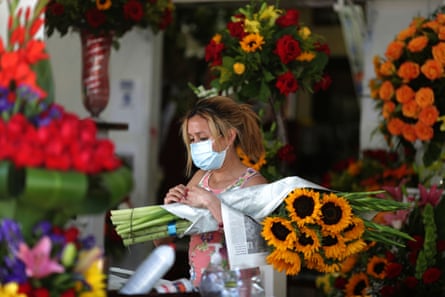
In many cities, the changes did not lead to immediate dramatic changes. Several local governments have announced they will take more time to open up, and many smaller retail stores have already organized curbside pickup. In the Los Angeles region, where half of the state’s Covid-19 deaths have occurred, officials are maintaining most restrictions and making only “minor adjustments”, allowing some brick-and-mortar business to start curbside pickup, including music stores, bookshops, florists and clothing stores.
The county, which remains the primary coronavirus hotspot in California, was also reopening some popular hiking trails and golf courses, but have said residents must continue to practice social distancing and wear face coverings if near others. This first phase, LA officials said, is the beginning of “a slow and gradual change to a new reality” for Angelenos.
The beaches in Orange county, which Newsom shut down after they drew massive crowds last month, are also reopening, but officials are keeping many parking lots closed and only allowing “active recreation” like running and swimming while banning sunbathing and stationary hangouts.
The city of San Francisco said it, too, will allow some businesses to open with curbside pickup, but was delaying that move until 18 May. Like LA, bookstores, florists, and music stores will be the first merchants allowed to operate storefront pickup, the city said.
“Giving businesses the option to reopen and provide storefront pickup will provide some relief for everyone in our city – allowing some people to get back to work, while still protecting public health,” the mayor, London Breed, said in a statement. “The last thing we want is to see a spike in the number of cases or hospitalizations, so we’re going to be keeping close track of our key Covid-19 indicators and will be ready to make any adjustment needed to keep our community healthy.”
Some rural counties in northern California didn’t await the governor’s decision. Modoc county was the first last week to allow its only movie theater resume operations. Yuba and Sutter counties started opening up businesses such as retail stores, gyms, salons and tattoo parlors on Monday, prompting a warning from the governor they were making “a big mistake”.
In Yuba City and Marysville on Tuesday, few customers wore masks when they entered stores or strolled along the sidewalks. The counties’ public health commissioner warned the business communities the next day to make sure employees and customers adhere to social distancing guidelines and wear face coverings. “It has become clear a number of businesses are not enacting required protocols to ensure the safety of the community,” Dr Phuong Luu said.
Businesses across California, America’s most populous state, are eager to follow suit. Since the stay-at-home order was issued on 19 March, more than 4 million Californians have been put out of work. Newsom projected on Thursday the state will have a budget shortfall of $54.3bn because of the economic devastation wrought by the coronavirus.
Small groups of protesters have gathered in cities across the state in recent weeks, urging Newsom to open up.
Public health officials have cautioned, however, that the state has not seen a sustained decline in Covid-19 cases, and that its capabilities to test people and trace who might have been exposed to the virus are nowhere near those of countries like South Korea and Germany that have successfully eased restrictions.
By Thursday, California had recorded more than 61,000 confirmed cases and 2,500 deaths. If the numbers continue to decline, the next phase in the governor’s plan could see salons, gyms, movie theaters and in-person church services resume. That phase, however, could be months away. Phase four would end all restrictions and allow for large gatherings at concerts and sporting events.
Jefferson Wagner, owner of Zuma Jay surf shop along the Pacific Coast Highway in Malibu, put up a sign that said “no mask, no service” as he prepared to reopen Friday, allowing customers to order in advance and pick up surfboards, apparel or other items in the parking lot. “We’ve got full inventory. We’re well stocked after two months of doing nothing,” said Wagner, 66, who is also a longtime Hollywood special effects operator. “We’ve gotta get these businesses open … though in LA and Malibu, we’re not the kind to run around and carry banners and firearms to protest.”
Read the original article at The Guardian