Cameron dismisses Johnson’s DfID/FCO merger as ‘mistake’ that will lessen respect for UK – live news
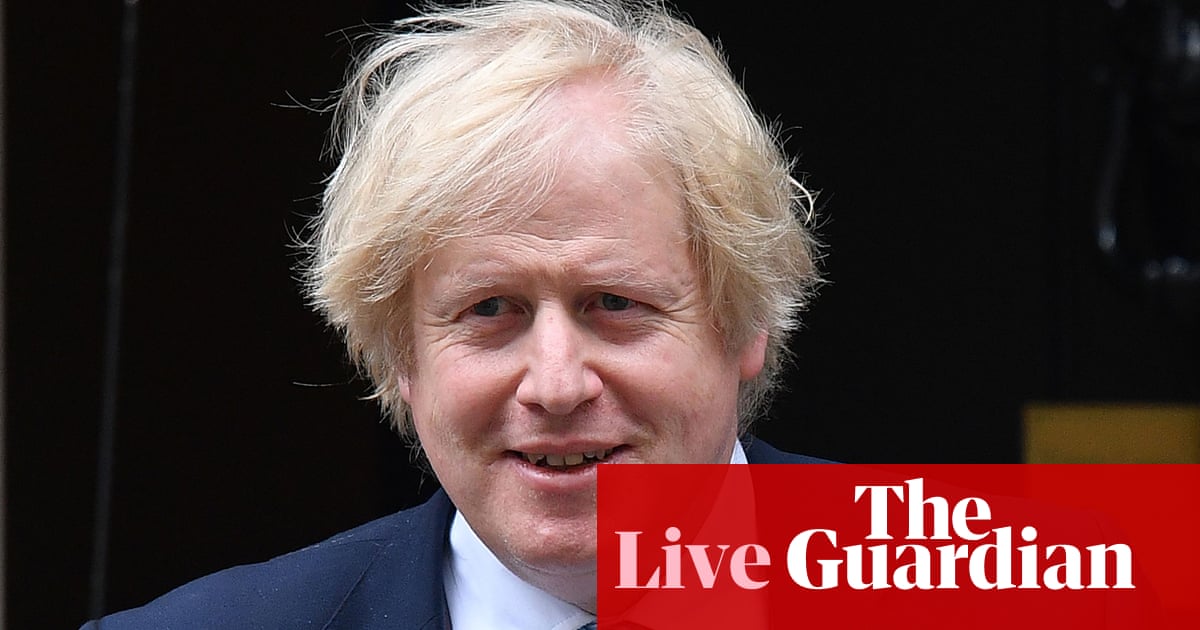
The full text of Boris Johnson’s opening statement to MPs about the merger of Dfid and the FCO is here. But, as is often the case with exchanges in the Commons, some of his impromptu language was more revealing. Two replies to MPs were particularly striking because they suggested that his instinctive view of British foreign policy is inherently reactionary.
Johnson calls DfID ‘a giant cashpoint in the sky’
Replying to a question from the Tory MP Steve Double, Johnson said:
What is actually happening, of course, is that Dfid and the FCO are now joining together to become a new Whitehall super-department for international affairs, which will be of huge benefit to our ability to project Britain’s sense of mission about overseas aid.
For too long, frankly, UK overseas aid has been treated as some giant cashpoint in the sky that arrives without any reference to UK interests or to the values that the UK wishes to express or the priorities diplomatic, political or commercial of the government of the UK.
This phrase was condemned by the former Conservative Foreign Office minister Alistair Burt, who posed these on Twitter.
Rt Hon Alistair Burt
(@AlistairBurtUK)It is not impossible to merge @DFID_UK and @foreignoffice & maintain the UK’s immense international reputation for leadership in development, if key skills & people are retained, though it is more difficult without the standalone dept and cabinet minister showing UK commitment.
Rt Hon Alistair Burt
(@AlistairBurtUK)However it is impossible to do so if the rationale is declared to be closing a “cash point in the sky dispensing aid with no regard to UK interests or values”.This is untrue, & deeply disrespectful to countless public servants at all levels of @DFID_UK over the years.
Johnson suggests diplomacy is about dealing with leaders who cut their opponents’ heads off
In response to a question from the SNP’s Kirsty Blackman, Johnson said:
It is no use a British diplomat one day going in to see the leader of a country and urging him not to cut the head off his opponent, and to do something for democracy in his county, if the next day another emanation of the British government is going to arrive with a cheque for £250m. We have to speak with one voice. We must project the UK overseas in a consistent and powerful way.
After saying “cut the head off his opponent”, Johnson paused, as if he had realised that he had said something wrong. He probably had, although no one seemed to object at the time. This sounded like a line from one of his reactionary Daily Telegraph columns, redolent of an imperialist world view in which foreigners are assumed to be less civilised.
Tony Blair has said that he is “utterly dismayed” by the decision to merge DfID with the FCO.
Tony Blair Institute
(@InstituteGC)Tony Blair: “I am utterly dismayed by the decision to abolish DFID. We created DFID in 1997 to play a strong, important role in projecting British soft power. It has done so to general global acclaim. (1/3)
Tony Blair Institute
(@InstituteGC)“It is a leader in both programmes and thought in development, helping millions of the world’s most vulnerable to be relieved of poverty and killer diseases. (2/3)
Tony Blair Institute
(@InstituteGC)The strategic aims of alignment with diplomacy and focus on new areas of strategic interest to Britain could be accomplished without its abolition. Wrong and regressive move.” (3/3)
Boris Johnson has now managed to unite three former prime ministers – two Labour ones and one Conservative – in opposition to his plan to get rid of DfID as a stand-alone department.
We are yet to hear from Sir John Major and Theresa May on the subject. But Major never set up an independent department for international aid himself, and so is unlikely to feel any attachment to DfID, and May showed little interest in this area during her short, Brexit-dominated premiership.
Arlene Foster, the first minister of Northern Ireland, has said she will be proposing the extension of free school meal support to the region’s pupils over the summer holidays. She told told the Northern Ireland assembly she would make the proposal to colleagues in the power-sharing coalition. The measure would be dependent on the necessary funds being found, she said.
For the record, this list shows how today’s UK coronavirus daily death figure, 233 (see 3.36pm), compares to the equivalent figures for the past two weeks.
Tuesday 2 June – 324
Wednesday 3 June – 359
Thursday 4 June – 176
Friday 5 June – 357
Saturday 6 June – 204
Sunday 7 June – 77
Monday 8 June – 55
Tuesday 9 June – 286
Wednesday 10 June – 245
Thursday 11 June – 151
Friday 12 June – 202
Saturday 13 June – 181
Sunday 14 June – 36
Monday 15 June – 38
The Department of Health and Social Care has released the latest coronavirus death figures for the UK. There have been a further 233 deaths, taking the total to 41,969.
These headline figures only include deaths where someone tested positive for coronavirus. But thousands of people have died without having a test, which is why the ONS totals are higher. (See 10.19am.)
Department of Health and Social Care
(@DHSCgovuk)As of 9am 16 June, there have been 6,981,493 tests, with 113,107 tests on 15 June.
298,136 people have tested positive.
As of 5pm on 15 June, of those tested positive for coronavirus, across all settings, 41,969 have sadly died.
More info:
▶️ t.co/xXnL3FU15k pic.twitter.com/28Bl6z3tA1
NHS England today recorded a further 79 hospital deaths in England. The full details are here.
In Wales a further eight deaths have been recorded.
Scotland has recorded five more deaths today.
And there has been one further death in Northern Ireland.
Another former prime minister, Gordon Brown, has also criticised the decision to merge DfID and the FCO. He says Boris Johnson is “abolishing one of the UK’s great international assets”.
Gordon & Sarah Brown
(@OfficeGSBrown).@DFID_UK has lifted millions of people out of poverty, saved millions of lives, and helped millions more children go to school. It’s sad the government is abolishing one of the UK’s great international assets ~ GB t.co/rVXnhuKjc1
In the Commons Labour’s Emma Hardy asks Johnson if he agrees with David Cameron. (See 2.46pm.)
Johnson says he does not. He says at the moment there is “an incoherence” in foreign policy. He says the merger will make aid specialists more influential.
And David Cameron, who appointed Andrew Mitchell as international development secretary and who was PM when the UK finally hit the 0.7% aid spending target (which was never popular with Tory activists), has also criticised the move. He says it is a “mistake” that will lead to the UK being less respected abroad.
For Cameron, speaking out in these terms is quite a big deal. Since leaving No 10 in 2016 he has largely avoided criticising his successors, even though Theresa May and Boris Johnson have both pursued policies that he would not support.
David Cameron
(@David_Cameron)The Prime Minister is right to maintain the commitment to 0.7 – it saves lives, promotes a safer world and builds British influence. But the decision to merge the departments is a mistake. 1/2
David Cameron
(@David_Cameron)More could and should be done to co-ordinate aid and foreign policy, including through the National Security Council, but the end of @DFID_UK will mean less expertise, less voice for development at the top table and ultimately less respect for the UK overseas. 2/2
Earlier Sir Keir Starmer said Andrew Mitchell, the Conservative international development secretary when David Cameron was PM, had described the DfID/FCO merger as a mistake. The Birmingham Mail has the full quote from Mitchell. Mitchell said:
Abolishing Dfid would be a quite extraordinary mistake. First, it would destroy one of the most effective and respected engines of international development anywhere in the world.
Second, many of the senior figures who are key to Britain’s role as a development superpower will likely leave and go elsewhere in the international system – at a stroke destroying a key aspect of global Britain.
Third, it is completely unnecessary as the prime minister exercises full control over DfID’s strategy and priorities through the national security council.
These are from Dominic Raab, the foreign secretary, on the DfID/FCO merger.
Dominic Raab
(@DominicRaab)1. UK Aid 🇬🇧 is a shining example of #GlobalBritain at work giving us strengths and expertise to tackle the world’s biggest problems. Combining the assets of DFID and FCO under one roof will be an even stronger force for good in the world.
1/4
Dominic Raab
(@DominicRaab)I will work closely with @annietrev to oversee merger of two departments over the summer building on our existing joint working. UK Aid will be at the centre of what we do – we aren’t rolling back on our commitments to international development including 0.7 of GDP.
2/4
Dominic Raab
(@DominicRaab)DFID officials have done fantastic, life changing work from tackling disease and hunger across globe, to combatting violence against women and girls while lifting millions out of poverty. Fused together we will leverage DFID expertise with the reach of the FCO global network.
3/3
Dominic Raab
(@DominicRaab)The pandemic has shown security, prosperity, development and foreign policy are inextricably interlinked. These changes mean the UK will be best placed to lead the international effort on COVID recovery and renewal.
4/4
The Lib Dem MP Wera Hobhouse says the PM seems to be saying the UK will only help the poorest in the world if they are buying British goods.
Johnson says Hobhouse should be proud of what the UK is doing around the world.
Labour’s Kevin Brennan asks if Dominic Raab, the foreign secretary, and Anne-Marie Trevelyan, the international development secretary, will both have to apply for the post to run the new department.
Johnson sidesteps the questions.
The SNP’s Kirsty Blackman asks if the purpose of the new department will be to help the poorest in the world, or if it will be to enhance British power abroad?
Both, says Johnson.
He says there is no point in having a British ambassador asking a foreign leader not to cut the head off one of his rivals if another British official is going to turn up a day later with a cheque for £250m.
UPDATE: I’ve corrected this post because Johnson said “cut the head off”, not “chop the head off”, and he said £250m, not £250,000. I’ve posted the full, direct quote at 4.25pm.
Johnson says British ambassadors will be listened to more seriously if they represent a department in charge of all UK government overseas spending.
Read the original article at The Guardian