Coronavirus live news: Brazilian judge orders Bolsonaro to wear mask; German district put in local lockdown
Britain’s car sector could lose one in six jobs or about 25,000 posts due to the economic fallout from coronavirus, industry body the Society of Motor Manufacturers and Traders has warned.
The SMMT survey findings come after the sector has already shed more than 6,000 jobs in June at carmakers including Aston Martin, Bentley, Jaguar Land Rover and McLaren.
The SMMT called for more urgent government action with one third of automotive employees still furloughed (having most of their wages paid by the state), under a jobs retention scheme that runs out in October.
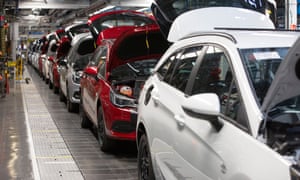
The nation’s carmakers have been ravaged by the deadly Covid-19 outbreak, with sales falling off a cliff after the government imposed a nationwide lockdown on 23 March.
Car showrooms in England, however, reopened in early June as the UK government finally eased the lockdown.
The SMMT now wants the government to consider support measures including emergency funding access, tax holidays, and cuts in value added tax to help stimulate car sales.
A hugely popular Indian guru touting herbal remedies as a $7 cure for coronavirus has been told by the government he needs to prove his claims before further marketing.
Baba Ramdev, a supporter of prime minister Narendra Modi, said the remedy would be available from next week through his lucrative Patanjali Ayurved company, claiming it was 100% successful on nearly 300 test patients.
The ubiquitous company is worth several hundred million dollars, selling everything from toothpaste to jeans. It is a major player in a vast Indian consumer goods market of 1.3 billion people.
Speaking at his company’s headquarters in Haridwar, Ramdev said that “Coronil” and “Swasari” could cure coronavirus in a week.
“Some 280 patients were included in the clinical trials and 100% recovered,” he claimed. 69% recovered in three days and the rest within seven, he told reporters.
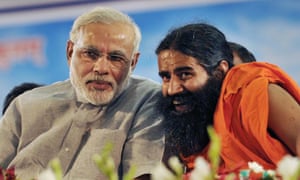
He said the trials were conducted in association the government-run National Institute of Medical Sciences but did not specify whether they received approval from India’s drug authority.
However, the Ministry of Ayurveda, Yoga and Naturopathy, Unani, Siddha and Homoeopathy (AYUSH) said it had asked the firm for more details and told it not to advertise its claims until they were examined.
Ayurvedic medicines have been used for centuries in India but Ramdev – who has a yoga TV channel despite saying he lives an ascetic life – has tapped into booming demand since creating his firm in 2006.
The company has been marred by several controversies, however, including a massive row over a drug called “Divya Putrajeevak Beej” (Divine Son-Bearing Seed) that sparked allegations it promoted child sex selection.
The company – India’s 13th most trusted brand according to rankings published earlier this year – has previously claimed it had cancer remedies, while Ramdev has also said he can “cure” homosexuality and AIDS.
Modi, who is currently battling a surge in coronavirus with almost 450,000 cases and almost 15,000 deaths, last week suggested that yoga could help create a “protective shield” against the coronavirus.
Bulgarian prime minister Boyko Borissov will be fined 300 levs ($174) for violating an order to wear a protective face mask during a visit to a church on Tuesday, the health ministry said.
Health minister Kiril Ananiev on Monday ordered Bulgarians to resume wearing masks again at all indoor public venues after the Balkan country last week recorded its highest weekly rise in coronavirus cases.
“All persons who were without protective face masks in the church at the Rila Monastery during the prime minister’s visit will be fined,” the health ministry told Reuters in an email.

As well as Borissov, journalists, photographers and camera people who accompanied him into the church without masks will also be fined, the ministry said.
It did not say whether clergy who failed to wear masks inside the church would also be penalised.
Bulgaria has weathered the Covid-19 pandemic relatively well due to rigorous lockdown restrictions including the compulsory wearing of face masks in public places.
It had begun to relax the measures this month, but last week it reported 606 new Covid-19 cases, bringing the total to 3,984, with 207 deaths, prompting Ananiev’s decision to reimpose the mask requirement at indoor public venues, including on trains and buses.
On Monday, chief state health inspector Angel Kunchev said Borissov’s ruling centre-right GERB party and the opposition Socialist Party would each be fined 3,000 levs for failing to enforce social distancing at recent large-scale events they organised.
As coronavirus chaos has enveloped Pakistan, with hospitals overflowing, doctors dying and infections escalating at an unmanageable rate, a dangerous black market in blood plasma has emerged, write Hannah Ellis-Petersen and Shah Meer Baloch.
The blood plasma of recovered coronavirus patients is now being sold for upwards of £3,000 to those who are desperately looking for a cure, at a time when doctors say Pakistan’s healthcare system is on the brink of collapse.
Convalescent plasma is being trialled around the world as a possible treatment for the disease. It contains antibodies generated by the immune systems of people who have fought off the virus.
Doctors in government hospitals in Islamabad told the Guardian they had witnessed transactions between patients and intermediaries. The Guardian has also seen multiple text messages between people across Pakistan who are buying and selling the plasma of recovered patients.
“The hospitals are not involved but I have seen deals happen in front of me,” said a doctor at a government hospital in Islamabad, who asked not to be named. “Usually a patient’s attendants or family will approach someone who has recovered, asking them to donate blood. When a certain amount is agreed as payment, usually between 200,000 and 800,000 rupees (£950-£3,800), they go to a private lab and extract the plasma, which is then ‘donated’ to the patients.”
A Brazilian judge has ordered Jair Bolsonaro to rectify his “at best disrespectful” behaviour by wearing a face mask when circulating in the capital, Brasília.
The president has sparked outrage by repeatedly flouting measures designed to slow the advance of a coronavirus pandemic that has killed more than 50,000 Brazilians.
The rightwing populist has made a succession of public appearances – at protests, shops and even a floating barbecue – wearing a mask incorrectly, or not at all.
On Monday, a federal judge ruled Bolsonaro was not above the laws of the federal district, which contains Brazil’s capital, and would face a daily fine of 2,000 reais (about £330) if he continued to break the rules. The use of masks has been compulsory there since late April.
According to a transcript published by the Estado de São Paulo newspaper, Renato Coelho Borelli ruled:
The president of the republic must take all necessary measures to avoid the transmission of Covid-19 – be that in order to protect his own health or that of those around him.
Even though there is no consensus within the medical/scientific community about the dissemination of Covid-19 by asymptomatic carriers, it is at best disrespectful to go out in public without using PPE – putting other people’s health at risk.
A straightforward Google search is enough to find numerous images of the defendant Jair Messias Bolsonaro moving around Brasília and the surrounding federal district without using a mask and exposing others to the spread of this infirmity that has caused a nationwide upheaval.
The judge cited Brazil’s oath of office in which presidents vow to “uphold, defend and fulfil the constitution, obey the laws [and] promote the well-being of the Brazilian people”.
“That’s to say, the president is constitutionally obliged to follow the country’s existing laws, as well as promote the wellbeing of the population, which means taking the necessary measures to … prevent the propagation of a virus that is spreading rapidly and often silently.”
“No one, not even the head of the executive, is above the constitution and laws of the republic,” the judge concluded.
Bolsonaro made no immediate comment on the ruling.
Smoking shisha will remain banned in Egypt even after a partial reopening of cafes, restaurants, places of worship, cinemas and sporting clubs on Saturday, the prime minister, Mostafa Madbouli, has said.
Madbouli said cafes and restaurants will restart operations at a reduced capacity of 25 percent in the first phase of relaxing the lockdown, but warned that shisha (water-pipe) smoking, a popular social activity among Egyptians, is still banned to prevent the spread of the disease. Cafes and restaurants will be allowed to remain open to customers until 10 pm, while shops can operate until 9pm.
A night-time curfew was imposed in late March restricting movement from 8pm to 6am, but it has been eased in recent weeks. The curfew will run from midnight to 4am, Mabouli said in a televised address in which he announced a number of decisions that would take effect on 27 June.
“We have the ability to move past this pandemic with the best results at hand and the minimum number of losses,” he was quoted as saying by the AFP news agency.

Mabouli also said daily services in mosques and churches in the deeply religious country will resume, but weekend services, which attract large congregations, remain suspended. Cinemas, cultural centres and sports clubs will reopen at 25% capacity to ensure social distancing, while public transport running times are to be extended. Beaches and public parks remain out of bounds.
“We all have to live with the pandemic… We have been trying to balance between opening up the country and maintaining the necessary health measures,” Madbouli said.
Egypt has officially recorded over 56,000 coronavirus cases and more than 2,000 deaths.
A vaccine against Covid-19 may not work well in older people who are most at risk of becoming seriously ill and dying from the disease, say scientists, which may mean immunising others around them, such as children, writes Sarah Boseley, the Guardian’s health editor.
Prof Peter Openshaw, from Imperial, one of the members of the UK’s Sage scientific advisory sub-group NERVTAG, told the House of Lords science and technology committee it was this week considering a paper on targeting different groups in the population with vaccines.
“Sometimes it is possible to protect a vulnerable group by targeting another group and this, for example, is being done with influenza,” he said. “In the past few years, the UK has been at the forefront of rolling out the live attenuated vaccine for children.”
Giving the nasal spray flu vaccine to children who do not often get severe flu protects their grandparents, he said. Immunising health and care workers – who are likely to be the first to get the vaccine – would also help protect older people who have the most contact with them.
More than 100 million children in South Asia could slip into poverty as a result of the coronavirus pandemic, a UN report said of the long-term impact of the crisis.
Cases across the densely populated region – home to almost a quarter of the world’s population – have risen in recent weeks even as the countries lift lockdowns to revive economies badly shattered by the virus.
“While they may be less susceptible to the virus itself, children are being profoundly affected by the fallout, including the economic and social consequences of the lockdown,” the report by the UN children’s agency, Unicef, said.

South Asia – which includes India, Pakistan, Afghanistan, Nepal, Bangladesh, Sri Lanka, the Maldives and Bhutan – is home to some 600 million children, with about 240 million already living in poverty, the agency said.
In a worst-case scenario, the virus could push a further 120 million into poverty and food insecurity within six months, it warned.
Unicef’s South Asia regional director, Jean Gough, said:
Without urgent action now, Covid-19 could destroy the hopes and futures of an entire generation.
Progress in healthcare – such as immunisation, nutrition and other services – were being “severely disrupted”.
In Bangladesh, Unicef said it found that some of the poorest families could not afford three meals a day, while in Sri Lanka its survey showed that 30% of families had cut their food intake.
With schools shut, poorer children have struggled to keep up with their education, particularly those in rural households without internet access – or even electricity.
“There are concerns that some disadvantaged students may join the nearly 32 million children who were already out of school before Covid-19 struck,” the report added.
Other major concerns include the risks of domestic violence, depression and other mental health issues with youths spending more time at home.
Russia is holding its postponed Victory Day military parade on Wednesday despite steadily rising coronavirus infections, as Vladimir Putin seeks a popularity boost in the run-up to a referendum on extending his time in office.
The parade celebrates the defeat of Nazi Germany and has grown to outsize proportions in the years since Putin came to power at the turn of the century.
On 1 July, Russians will vote on amending their country’s constitution to allow Putin to run twice more for president, potentially extending his stay in the Kremlin to 2036,
Online voting will begin less than 24 hours after an estimated 14,000 Russian troops, as well as tanks, artillery, and aircraft, traverse Red Square in a patriotic display of the country’s military prowess.
The preparations for the parade have involved complex political considerations over Russia’s hurried exit from coronavirus shelter-in-place measures to accommodate the crucial political season.
The Moscow mayor, Sergei Sobyanin, appeared to yield to pressure to end Moscow’s lockdown earlier this month but he has urged spectators to avoid crowding the streets to catch sight of the passing military hardware.
“It’s better to watch it on television,” he said. “There shouldn’t be any crowds, there shouldn’t be spectators there.”
Read the original article at The Guardian