Coronavirus live news: cases in Africa pass 150,000; Germany lifts travel warning for Europe
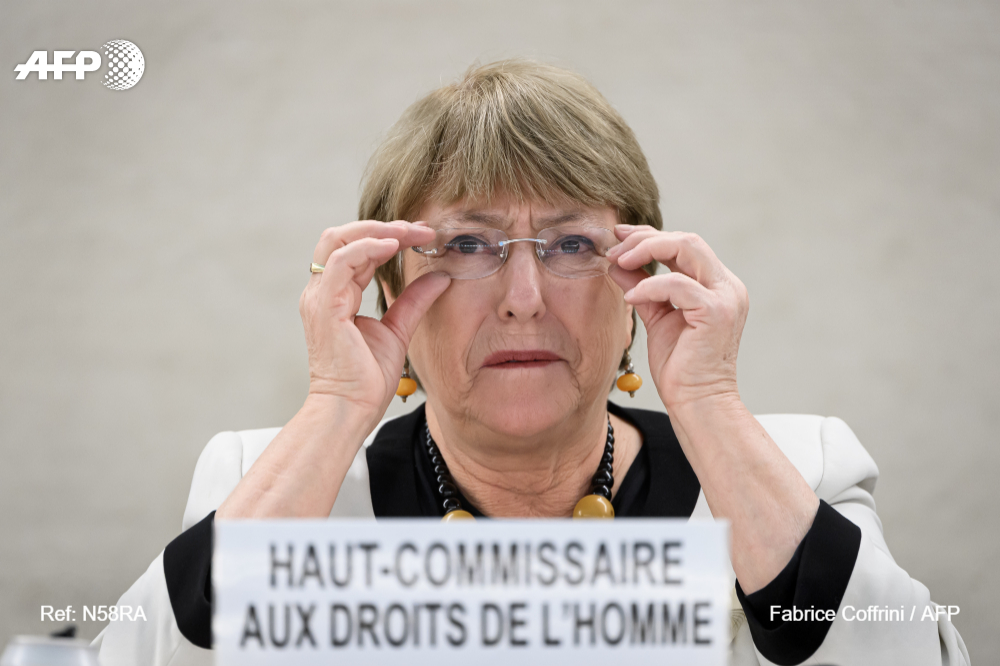
The Covid-19 pandemic is exposing “endemic inequalities” that must be addressed, according to the United Nations’ human rights chief, who highlighted the protests triggered by George Floyd’s death.
Michelle Bachelet, UN High Commissioner for Human Rights, referenced the situation in the United States and a series of other countries, saying data shows the coronavirus crisis has had a worse impact on racial and ethnic minorities.
“This virus is exposing endemic inequalities that have too long been ignored,” she said in a statement, according to AFP.

Similar inequalities were also fuelling the widespread protests in hundreds of US cities over the police killing in Minneapolis last week of Floyd, an unarmed black man, Bachelet said. “In the United States, protests triggered by the killing of George Floyd are highlighting not only police violence against people of colour, but also inequalities in health, education, employment and endemic racial discrimination,” she explained.
She noted the virus death rate for African Americans is reportedly more than double that of other racial groups in the United States. Her statement also highlighted the situation in the UK, where an official study has found that black, Asian and minority ethnic (BAME) people are up to 50% more likely to die after being infected with Covid-19.
And she pointed to Brazil, where people of colour in Sao Paulo are 62% more likely to die from the virus than white people, and in France’s heavily minority-inhabited Seine Saint-Denis suburb of Paris, which has reported higher excess mortality than other areas.
“The appalling impact of COVID-19 on racial and ethnic minorities is much discussed, but what is less clear is how much is being done to address it,” Bachelet said.
Urgent steps need to be taken by states, such as prioritising health monitoring and testing, increasing access to healthcare, and providing targeted information for these communities.”
“People from racial and ethnic minorities are also found in higher numbers in some jobs that carry increased risk, including in the transport, health and cleaning sectors,” the statement said. She added:
Collection, disaggregation and analysis of data by ethnicity or race, as well as gender, are essential to identify and address inequalities and structural discrimination that contribute to poor health outcomes, including for Covid-19.
“The fight against this pandemic cannot be won if governments refuse to acknowledge the blatant inequalities that the virus is bringing to the fore,” Bachelet warned.
It is a country famed for its rich cuisine but during lockdown diners in France have been prevented from enjoying the country’s plethora of restaurants.
But now the country has taken a step closer to returning to some sense of normality, as cafes and restaurants opened their doors today for the first time since the Covid-19 control measures were imposed.

Although restrictions remain in the Paris region, where only outdoor seating and takeout is allowed at restaurants with dining rooms remaining closed, customers still flocked to seize the chance to bask on sunny terraces after 10 weeks of closures to fight the outbreak.
“I’ve missed this so much… we’re social animals, after all,” Rachida, 70, told AFP while sipping an espresso as her grandson enjoyed a lemonade at her local cafe in Romainville, a Paris suburb.
There were similar scenes elsewhere. “I’m almost overwhelmed,” Martine Depagniat, wearing a beige face mask and sunglasses, said at the Cafe de la Comedie in Paris, just across the street from the Louvre Museum where she works. “I think people really need a return to normal, even though there’s still a bit of nervousness,” she said.
But it’s not quite business as normal in the country – which has suffered more than 28,000 Covid-19 deaths – with many servers and customers wearing face masks and tables kept at least one metre apart new under government regulations.
In the rest of the country, where cafes and restaurants are fully open, some even welcomed customers at the stroke of midnight to celebrate their newfound freedom under a further relaxation of lockdown rules. “We’re leaving our confinement, to rediscover the pleasures and good times spent together,” said Frederic de Boulois, president of a regional hotel association in Nantes, western France, speaking from the Prison du Bouffay, a restaurant that sits atop a former mediaeval dungeon.
At the Cafe de Flore, a Left Bank institution in the French capital, waiter Philippe Da Cruz wore a surgical mask over his black vest and impeccably knotted tie as he chatted with clients. “They’re incredibly happy to be back, doing everyday things,” he said. “The real deconfinement is now beginning.”
AFP news agency
(@AFP)#BREAKING Coronavirus, protests lay bare ‘endemic racial discrimination’ in US: UN rights chief Bachelet pic.twitter.com/oEcvxSIlHz
Keeping at least 1-metre apart and wearing face masks and eye protection are the best ways to cut the risk of coronavirus infection, according to the largest review to date of studies on coronavirus disease transmission, Reuters reports.
In a review that pooled evidence from 172 studies in 16 countries, researchers found frequent handwashing and good hygiene are also critical – though even all those measures combined can not give full protection.
The findings, published in the Lancet journal on Monday, will help guide governments and health agencies, some of whom have given conflicting advice on measures, largely because of limited information about Covid-19.
“Our findings are the first to synthesise all direct information on Covid-19, Sars, and Mers, and provide the currently best available evidence on the optimum use of these common and simple interventions to help ‘flatten the curve’”, said Holger Schünemann, from McMaster University in Canada, who co-led the research.

Current evidence suggests the coronavirus is most commonly spread by droplets, especially when people cough, and infects by entering through the eyes, nose and mouth, either directly or via contaminated surfaces.
Derek Chu, an assistant professor at McMaster University, who co-led the work, said people should understand that “wearing a mask is not an alternative to physical distancing, eye protection or basic measures such as hand hygiene.”
Read the original article at The Guardian