Coronavirus live news: cases spreading out of control in Hong Kong; UK infection rate flat, says ONS head
Back-garden archaeology: Britons unearth artefacts during lockdown
Neolithic arrowheads and an ancient belt hook are among several historical artefacts unearthed in Britons’ back gardens during lockdown.
The British Museum’s portable antiquities scheme has been notified of a number of archaeological discoveries from people who had extra time to tend to their gardens amid weeks of restrictions.
Among these treasures is a post-Medieval belt hook in the shape of a snake found in Herefordshire, and a Medieval silver coin discovered beneath a lawn in Stoke-on-Trent. In Coventry, a rock with script thought to date from the 4th century was found. Meanwhile, eight fragments of Roman greyware pottery were found in the Leicestershire village of Wymeswold.
Read the full report:
Bitter coronavirus summit exposes trust deficit among EU leaders
My colleague in Brussels, Jennifer Rankin, has this latest on the EU’s coronavirus summit, after the bloc’s third day of difficult negotiations drew to a close. She writes:
Bad-tempered, late-running EU summits have hardly been unusual over the last decade of eurozone crisis and endless fights over migration. But the latest three-day gathering of EU leaders, with a €1.8tn (£1.6tn) financial plan at stake, may be one of the most acrimonious yet.
In this piece, produced by our Australian office, the writer Anna Poletti tells of her experience.
“We are four months into the pandemic and we are all tired and some people are wondering, because they lack direct firsthand experience of anyone with the virus, whether there is really anything to worry about. I caught the virus very early, and I can’t tell you how long it takes to recover from it, because I have not recovered.”
Read the full piece here:
In the UK, senior doctors are pleading with the public to help prevent a second wave of coronavirus that could “devastate” the NHS, amid concern at mixed government messages about face masks and returning to work, reports my colleague Robert Booth.
Prof Carrie MacEwen, chair of the Academy of Medical Royal Colleges, said medics and healthcare workers felt “totally reliant on the public understanding that this has certainly not disappeared and could come back and cause even more suffering for the population”.
Downing Street has said its scientific advice is that new infections are falling at a rate between 1% and 5% a day across the UK. But on Sunday, the Scottish government confirmed a rise in new cases for the fifth consecutive day with 23 people testing positive – the highest daily rate since 21 June.
Read the full story here:
It is better for European Union leaders to agree an ambitious financial aid package for the bloc rather than to have a quick deal at any cost, according to the European Central Bank’s president Christine Lagarde.
“Ideally, the leaders’ agreement should be ambitious in terms of size and composition of the package, broadly along the lines of what has been proposed by the Commission,” Lagarde told Reuters.
“From my perspective, it’s better to agree on an ambitious facility along these lines, even if it takes a bit more time. I would hope that the leaders agree on something that’s ambitious rather than fast.”
A financial aid package designed to lift Europe out of its deepest recession since the second world war hung in the balance at a summit on Sunday as leaders bickered over details for the third straight day, raising the risk that the package could be delayed or drastically watered down.
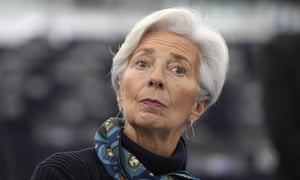
President of the European Central Bank (ECB), Christine Lagarde, attends a debate on the Eurozone’s economic governance and ECB activities at the European parliament in Strasbourg, eastern France, on 11 February 2020. Photograph: Frederick Florin/AFP/Getty Images
‘After more than a decade of eroding workers’ rights, it’s time for a proper new deal’
Boris Johnson unveiled his plan to return England ‘to normality’ on Friday. Among a raft of measures is to allow employers to discuss with workers whether it is safe for them to return to the office from 1 August.
On Johnson’s recovery plan, economics correspondent Richard Partington writes:
Britain had a problem with a lopsided power relationship at work before the pandemic began. A new report from the Common Wealth thinktank published on Monday argues that a new settlement for work is needed to be at the heart of a fair recovery agenda to address these issues. Failure to rewrite the rules could lead to unscrupulous employers forcing their staff back without adequately addressing their concerns.
Read the full story:
The French government has announced that it will issue a €135-euro (£122) fine to people who flout its decree to wear a mask in indoor public spaces.
Amid signs of an uptick in virus circulation, prime minister, Jean Castex, on Thursday said masks will become compulsory in enclosed public spaces from Monday in a bid to prevent a second wave of coronavirus infections.
French prime minister, Jean Castex, adjusts his protective mask before taking to the media, after the blaze at the Cathedral of Saint Pierre and Saint Paul in Nantes, France, 18 July 2020. Credit: Laetitia Notarianni/Pool via REUTERS Photograph: Reuters
Masks are already required on public transport, punishable with a fine of the same amount, in a country that has lost over 30,150 people to the epidemic.
On Saturday, the health minister said the new obligation will apply to shops and supermarkets, covered fresh produce markets, banks and other establishments that receive members of the public.
And on Sunday, the health department announced contraventions can be punished with a fine of up to €135 – almost double the price of a monthly Paris public transport pass.
For people working in communal offices, the government has said employers will have to judge the need for mask-wearing on a case-by-case basis.
France’s public health service noted over the weekend that the so-called R-number indicating the viral transmission rate has grown to over one, meaning that every infected person infects about 1.2 people in turn.
According to the latest official data, released Wednesday, France had 119 new coronavirus patients hospitalised in 24 hours, down from a high of 4,281 people hospitalised in one day in April.
‘Carbon savings’ from Covid-19 lockdown halve within weeks
The UK’s carbon emissions have begun to rebound following the easing of Covid-19 lockdown measures, causing the “carbon savings” triggered by the coronavirus to halve within weeks.
Greenhouse gas emissions from the energy and transport industries climbed last month as more people returned to work, raising demand for fossil fuels from record lows in April when strict lockdown measures were in place, according to new data.
My colleague Jillian Ambrose has the full report:
Florida reported over 12,000 new cases of Covid-19 on Sunday, the fifth day in a row the state has announced an increase of more than 10,000 infections.
The US’ virus death toll exceeded 140,000 earlier today. At least 14 states have reported record coronavirus hospitalisations so far in July, including Alabama, Arizona, Georgia, Florida, North Carolina, Nevada and Texas.
In spite of these nationwide trends, the Trump administration is pushing for schools to reopen in a few weeks and resisting a federal mandate to wear masks in public.
Test and trace failures risk exponential case growth in England, official warns
Failures of the government’s test-and-trace system are risking an exponential growth of coronavirus in hotspots across England, a director of public health has warned.
Dominic Harrison, the director of public health in Blackburn with Darwen, said the national tracing system was only managing to reach half of those who had been in close contact with a coronavirus patient in towns with high infection rates in the north-west.
In Blackburn with Darwen, where officials are battling a “rising tide” of cases, only 44% of 799 close contacts of someone with coronavirus had been successfully contacted by call-handlers, according to Harrison’s analysis. In Manchester, Oldham, Rochdale and St Helens, fewer than half of the at-risk people had been reached.
My colleague Josh Halliday has the full report:
The UK has recorded 27 more coronavirus deaths, bringing the total number of people who have died after testing positive to 45,300.
Department of Health and Social Care data updated just before 4pm on Sunday also shows that a further 726 cases were confirmed in the last 24 hours. The total number of people who have tested positive stands at 294,792.
These figures come after the government said on Saturday it would pause its daily updates on the coronavirus death toll amid growing concern that the number could have been exaggerated.
Earlier today, NHS England announced that a further eight people who tested positive for coronavirus have died in hospital. This brings the total number of confirmed deaths in English hospitals to 29,181.
Nigerian foreign minister ‘tests positive for Covid-19’
Nigeria’s foreign minister, Geoffrey Onyeama, says he has tested positive for Covid-19.
Onyeama, 64, is the first member of President Muhammadu Buhari’s cabinet to contract the virus.
He said in a tweet he had taken a Covid-19 test because of a throat irritation:
Geoffrey Onyeama (@GeoffreyOnyeama)
Did my fourth Covid-19 test yesterday at the first sign of a throat irritation and unfortunately this time it came back positive. That is life! Win some lose some. Heading for isolation in a health facility and praying for the best. #StayHomeSaveLives #COVID19 #PTFCOVID19
July 19, 2020
Cuba has reported no new domestic cases of Covid-19 for the first time in 130 days, as most of the country moved into the final phase of resuming normal activities with masks and social distancing.
Francisco Duran, head of epidemiology at the Ministry of Public Health, and who has updated the country daily on the pandemic, took off his mask during Sunday’s national broadcast to deliver the good news.
Only a handful of Covid-19 cases were reported in Cuba over the last week, all in Havana. Most of the Caribbean island, home to 11.2 million inhabitants, has been free of the disease for more than a month.
People with facial masks wait in line at a store in Havana, Cuba, 17 July 2020. Credit: EPA/Ernesto Mastrascusa Photograph: Ernesto Mastrascusa/EPA
“I always tell you to stay safe at home, but I know many will go to the beach today,” Duran said, before reminding his television audience about social distancing.
The capital’s 2.2 million residents remain at the first phase of three stages of reopening where they can once more move around on public and private transport, go to the beach and other recreation centres, and enjoy a seaside drive just in time for the summer break. They can also dine and have a drink.
Each phase allows capacity at venues to increase from an initial 60%. Interprovincial transportation begins during phase two, while phase three includes schools reopening.
Social distancing and wearing masks remain mandatory in most circumstances.
The country has opened a group of isolated resorts key to international tourism. Phase three broadens international travel, depending on risk.
The communist-run country has been given high marks for its textbook handling of the pandemic.
Cuba’s robust and free community-based health system, door-to-door search for carriers, isolation of the sick, suspected cases and contacts has allowed it to keep the number of infections under 2,500 with 87 deaths.
Hello. It’s Aaron Walawalkar in London here, picking up our global Covid-19 liveblog from my colleague Ben Quinn.
I’ll be steering you through the main developments taking place around the world. If you’d like to flag any stories that we should be covering, feel free to message me on Twitter at @AaronWala or email me.
• The World Health Organisation has reported the greatest daily increase in global Covid-19 cases, with the total rising by 237,743 in the 24 hours to Saturday. The biggest increases were reported in the US, Brazil, India and South Africa. As the global count of cases being tracked by Johns Hopkins University crossed 14m, with nearly 600,000 deaths, France announced that masks would be made mandatory in enclosed public spaces including banks, shops and indoor markets starting on Monday.
• Coronavirus is spreading out of control in Hong Kong with a record 100 new cases confirmed, the territory’s leader said today, as she tightened social distancing measures to tackle the sudden rise in number of infections. While the city has had initially impressive success in tackling the disease, all but ending local transmissions by late June, infections have spiked in the last two weeks once more and doctors fear the new outbreak is now spreading undetected in the densely packed territory of 7.5 million people.
• Donald Trump is seeking to block billions of dollars in funding for coronavirus testing and contact tracing efforts as cases spike across the US, where around 70,000 people are testing positive each day. White House opposition to spending proposed by Senate Republicans has sparked frustrations in his own party, according to the Washington Post, the New York Times and other media outlets.
• The UK prime minister, Boris Johnson, has insisted he can avoid imposing another England-wide lockdown this winter, describing it as a “nuclear deterrent” that he hopes never to use. Despite chief scientific adviser Patrick Vallance saying “national measures” might be necessary if there were fresh waves of the virus in the coming months, the prime minister said he “certainly” did not want to have to order the public to “stay at home” again.
• Authorities in Australia are stepping up their battle against coronavirus with the second biggest city of Melbourne announcing the introduction of mandatory face coverings from Wednesday. The premier of the Australian state of Victoria said people in Melbourne, and the adjacent shire of Mitchell to its north, would have to wear a mask or a face covering from 11.59pm on Wednesday.