Coronavirus live news: India records its highest daily rise in cases; EU border rules could bar US visitors
The “disinfecting” of Roma communities by low-flying planes and the high number of fines handed to minority groups has been cited in a report as evidence of the racial bias in the policing of the coronavirus lockdowns in Europe, writes Daniel Boffey, the Guardian’s Brussels bureau chief.
The report by Amnesty International, examining the enforcement of physical distancing measures in 12 European countries, concludes that the pandemic has led to greater “marginalisation, stigmatisation and violence”, echoing the long-standing concerns aired by the Black Lives Matter movement.
An increase in the stopping and searching of black people in London – from 7.2 out of 1,000 in March to 9.3 out of 1,000 in April – is referenced in the report, along with the lengthy curfews imposed specifically in areas in France where black, Asian and minority ethnic communities live.
In the département of Seine-Saint-Denis in Paris, home to a high proportion of black residents, the number of police checks was more than double the national average. The number of fines issued was also three times higher than in the rest of the country, despite respect of lockdown measures being comparable with other regions in France.
Amnesty said it had verified 15 videos of unlawful use of force or racist and homophobic insults by law enforcement officials from 18 March to 26 April 2020 in 15 French cities. Six of these involved enforcement of lockdown rules.
Some of the more shocking examples cited by the report, Policing the Pandemic: Human Rights Violations in the Enforcement of Covid-19 Measures in Europe, concern the mistreatment of Roma communities, often spurred on by populist politicians.
Michael Rosen has returned home after 47 days in intensive care with Covid-19, writes Alison Flood.
The award-winning and popular poet and children’s author began charting his illness on Twitter in March, writing of “bed-breaking shakes” and “freezing cold sweats”, of “deep muscle exhaustion” and the “image of war hero biting on a hankie, while best mate plunges live charcoal into the wound to cauterise it”. He went into intensive care at the end of the month, with his family warning that he was “very poorly” at the time.
It took 47 days for him to leave ICU, but on 6 June he took his first steps, and by 12 June he was back on Twitter, sharing his progress as he began walking again.
“Just as I was beginning to love my stick, Sticky McStickstick, I’m told, ‘You mustn’t become totally stick-reliant.’ Oh noooooooo!!!” he wrote on 22 June. “This wasn’t a snide dig at the physios! They are progressives. They see me walking the corridors with Sticky McStickstick, then walking a bit without, so they want me to go on. Quite right. Physios are the best!”
For the first time in nearly four months, residents at a care home in Barcelona have been able to kiss, hug and hold hands with their loved ones – safely shielded from the virus by thin sheets of plastic, writes Ashifa Kassam.
As it prepared to open its doors to visitors, the Ballesol Fabra i Puig care home set up plastic curtains to allow residents some form of physical contact, echoing a strategy adopted by care homes in Brazil and Argentina.
AP Images
(@AP_Images)In this Monday, June 22, 2020 photo, Agustina Canamero, 81, and Pascual Pérez, 84, hug and kiss through a plastic film screen to avoid contracting the new coronavirus at a nursing home in Barcelona, Spain, June 22, 2020. @EmilioMorenatti pic.twitter.com/WAvJb7uPZh
June 24, 2020
Among the first visitors to arrive was 81-year-old Agustina Cañamero. For the past 102 days she had been gripped by fear as Spain’s death toll rose to one of the highest in Europe, worried constantly about how her husband, Pascual Pérez, was faring at the care home where he lives. On Monday the couple of 59 years was reunited, trading kisses through layers of surgical masks and plastic.
Other photos captured by the Associated Press showed tears falling freely as visitors hugged and tightly grasped the hands of their loved ones and parents through the plastic.
Emilio Morenatti
(@EmilioMorenatti)Tras 4 meses de ausencia, Dolores Reyes, 61 y su padre José Reyes Lozano, 87, se abrazan por primera vez a través de una lamina de plástico para evitar el contagio del Coronavirus, en la residencia Ballesol Fabra i Puig de Barcelona el Lunes 22 de Junio de 2020. pic.twitter.com/lVNYi0VTD5
June 22, 2020
In March, as Spain battled one of the world’s fastest spreading outbreaks, officials barred visitors from care homes across the country. Stories soon began circulating of the virus silently stalking the halls of care homes across the country, with regional data suggesting the coronavirus has claimed more than 19,000 lives in Spanish care homes.
Egypt’s public prosecution says a prominent human rights activist will be held in pre-trial detention for allegedly “spreading fake news” about Covid-19 in Egypt, writes Ruth Michaelson.
Plainclothes security bundled Sanaa Seif into an unmarked van outside the Egyptian public prosecutor’s office yesterday when she, along with her family members went to report an assault that occurred earlier this week outside the Tora prison complex in Cairo.
Seif, her sister and mother were attacked and violently beaten in full view of the prison as guards looked on, after staging a sit-in as they attempted to receive a letter from Seif’s brother, Alaa Abd El-Fattah, a prominent activist.
Fears are mounting for thousands held inside the vast Tora prison, including Abd El-Fattah, over reports of Covid-19 cases inside the complex. Rights groups including Amnesty International have demanded a list of infected prisoners and staff, as well as the release of prisoners to ease overcrowding.
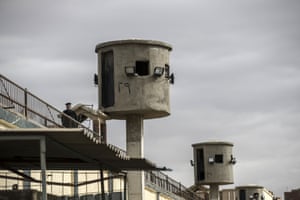
Seif appeared before Egypt’s supreme state security prosecution, a specialist national security court. Prosecutors decreed she be held for at least 15 days in pre-trial detention.
She is charged with “disseminating false news and rumours about deteriorating health conditions in the country and the spread of the coronavirus in prisons,” after allegedly making statements on her personal Facebook page. The prosecutor also accused her of “calling for demonstrations,” after she demanded prisoners be released to curb the spread of Covid-19.
Egypt criminalised “spreading false news,” in 2018, using a sweeping new media law which specifically targets anyone with over 5,000 social media followers. The controversial charge is often arbitrarily applied, especially by the supreme state security prosecution, to anyone making public statements even on benign topics. In recent years, charges of “joining a terrorist group,” and “spreading false news,” have been handed out to doctors, journalists, activists, civil servants and ordinary citizens.
Amnesty International says at least 12 journalists have been jailed in a crackdown on news related to Covid-19. Egypt’s public prosecutor warned in May that anyone accused of “spreading false news,” about the virus faces up to five years imprisonment and large fines.
Croatia will re-instate mandatory 14-day self-isolation for travellers from Bosnia, Kosovo, Serbia and North Macedonia due to an increase of coronavirus infections in the Balkans, the government has said.
The measure, which takes effect at midnight, will not apply to travellers who are only transiting through Croatia, interior minister Davor Božinović told reporters.
Home to 4.2 million people, Croatia has largely kept its coronavirus outbreak in check, limiting deaths to around 100 and known infections to slightly over 2,300.
But after registering only a few or no cases of the disease daily since mid-May, in the past week it has seen a rise up of to 30 infections a day.
The four Balkan nations have had a higher rate of infections since early June, with up to nearly 200 infections daily in North Macedonia.
In late May Croatia reopened its borders without restrictions to citizens from 10 EU countries – Austria, the Czech Republic, Estonia, Germany, Hungary, Latvia, Lithuania, Poland, Slovakia and Slovenia – that have had similarly successful results in containing the virus.
Zagreb made the move to salvage its key tourism industry hit by the pandemic.

Croatia and the entire region came under global spotlight after a Balkan tennis tournament spread the infections and its organiser Novak Djokovic, world number one, tested positive.
Apart from Djokovic, Grigor Dimitrov, Borna Ćorić and Viktor Troicki have all tested positive after participating in the Croatia leg of the event last weekend.
Critics blamed the organisers and health authorities for weak enforcement of social distance at the matches.
Croatia’s prime minister, Andrej Plenković, who attended the event in Zadar last Saturday and patted Djokovic on the shoulder, has also come under fire for not going into self-isolation.

In spite of some early predictions of a baby boom, many American women want to delay pregnancy and have fewer children because of the coronavirus pandemic, a new survey from the reproductive rights-focused Guttmacher Institute has found, writes Jessica Glenza for the Guardian US.
But whether they will have the access to the reproductive health services they need to fulfil those wishes is another question. The same survey reported women are having increased difficulty accessing contraception. Shutdown orders to slow the spread of Covid-19 cost millions of women their jobs and temporarily closed health clinics they relied on.
“In a relatively short time, the Covid-19 crisis and its unprecedented economic and social impacts have already changed when women want to get pregnant, how many children they want and if they’re able to get the contraception they need to make these fundamental life choices,” said Laura Lindberg, principal research scientist at the Guttmacher Institute, which focuses on reproductive rights policy.
The International Monetary Fund has said the global economy will take a $12tn (£9.6tn) hit from the Covid-19 pandemic after slashing its already gloomy growth projections for the UK and other developed countries in 2020, writes Larry Elliott, the Guardian’s economics editor.
The IMF said it would take two years for world output to return to levels at the end of 2019 and said governments should be cautious about removing financial support for their fragile economies.
In an update to forecasts published in April, the Washington-based IMF said it now expected the global economy to contract by 4.9% this year, compared with a 3% drop expected in the spring.
“The Covid-19 pandemic pushed economies into a Great Lockdown, which helped contain the virus and save lives but also triggered the worst recession since the Great Depression,” said the IMF’s economic counsellor, Gita Gopinath. She added that there would be a fall in living standards for 95% of countries this year.
The revised World Economic Outlook said the lockdown had dealt a “catastrophic hit” to the global labour market, adding that rising share prices were out of kilter with the deepest recession of the postwar era.
Read the original article at The Guardian