Coronavirus live news: Italy sees 1,000 new cases for first time since May
The Democratic-led US House of Representatives began voting on Saturday on whether to provide the cash-strapped Postal Service with $25 billion and block policy changes that have stirred concerns about mail-in balloting ahead of the 3 November election.
Under restrictions aimed at preventing the spread of coronavirus, the slow process of voting got under way after more than three hours of debate, during a rare Saturday session called by House Speaker Nancy Pelosi in the middle of the congressional August recess, Reuters reports.
The Democratic-led chamber is widely expected to pass the bill, dubbed the “Delivering for America Act.”
But it is unlikely to be taken up in the Republican-controlled Senate.
The White House strongly opposes the legislation and has said it would recommend that president Donald Trump veto the measure.
With mail-in voting expected to surge during the coronavirus pandemic, Trump has alarmed Democrats by repeatedly denouncing mail-in ballots as a possible source of fraud.

Postmaster General Louis DeJoy recently suspended cost-cutting measures that have slowed deliveries in recent weeks.
Democrats, who accuse Trump of trying to discourage mail-in balloting to gain an electoral advantage over Democratic presidential nominee Joe Biden, cast themselves as defenders of a public that relies on the Postal Service for vital deliveries including prescription drugs.
“The American people do not want anyone messing with the Post Office. They certainly do not want it to be politicized. They just want their mail, they want their medicines and they want their mail-in ballots delivered in a timely way. And that is exactly what our bill does,” said Democratic Representative Carolyn Maloney, who authored the legislation.
Maloney also released a Postal Service document showing an 8% slowdown in the processing of first class mail, most of it occurring after DeJoy became postmaster in June.
Republicans denied that the Postal Service was in any danger and criticized Democrats for moving legislation forward before DeJoy could testify at a House hearing slated for Monday.
“This is the result of a legislative process only slightly less absurd than the conspiracies, insinuations and fabrications that gave rise to the purported need for it,” said Republican Representative James Comer.
As lawmakers prepared to vote, Trump took to Twitter to accuse Pelosi and Senate Democratic leader Chuck Schumer of seeking unnecessary funding for the Postal Service and trying to pull off a “Universal Mail-In Ballot Scam.”
“Vote NO to the Pelosi/Schumer money wasting HOAX which is taking place now,” the president wrote.
Donald J. Trump
(@realDonaldTrump)Representatives of the Post Office have repeatedly stated that they DO NOT NEED MONEY, and will not make changes. This is all another HOAX by the Democrats to give 25 Billion unneeded dollars for political purposes, without talking about the Universal Mail-In Ballot Scam….
August 22, 2020
Donald J. Trump
(@realDonaldTrump)….that they are trying to pull off in violation of everything that our Country stands for. Vote NO to the Pelosi/ Schumer money wasting HOAX which is taking place now. Then fight the $51 million unasked for Ballots. Only ABSENTEE BALLOTS are acceptable!
August 22, 2020
DeJoy told a Senate committee on Friday that the Postal Service would deliver ballots “securely and on time” in the November election but said bigger changes could come after that.
In fact, the House bill would prevent DeJoy from taking any action that would impede service until after next January or the end of the coronavirus health emergency, whichever comes later.
“Our legislation is not just about the election. It’s about – surprise, surprise, Mr. Postmaster General – the coronavirus!” Pelosi told a news conference.
England’s chief medical officer has said it would be “foolish” to plan for winter on the basis of having a coronavirus vaccine.
But professor Chris Whitty told reporters on Saturday that there was a “reasonable chance” there could be vaccines to the virus before the winter of 2021-2022, the Press Association reports.
He warned that going into winter there will be “real problems” with Covid-19 and said that the country should plan on the basis of no vaccine being available.
He said:
I would obviously be delighted if it came earlier rather than later but I’d be quite surprised if we had a highly effective vaccine ready for mass use in a large percentage of the population before the end of winter, certainly before this side of Christmas.
Now that may be wrong, a lot of people are doing a huge amount scientifically, logistically to make sure that’s a pessimistic statement, to try and see if we can get a vaccine at extraordinarily fast speed but we have to check it works and we have to make sure it’s safe and these things do take time.
So I think if we look forward a year I think the chances are much greater than if we look forward six months and we need to have that sort of timescale in mind.
So planning for the next winter, it would be foolish to plan on the basis we will have a vaccine.
We should plan on the basis we will not have a vaccine and then if one does prove to be effective and safe and available then we’re in a strong position to be able to use it and that will be great but we should be planning on the basis of what we currently have.
Whitty added he was “confident in the long-term” that science would have the ability “to get us out of this hole”, but stressed that this would be unlikely to be the case in the next few weeks or even months.

Brazil reported 50,032 new cases of the novel coronavirus and 892 deaths from the disease caused by the virus in the past 24 hours, the health ministry said on Saturday.
Brazil has registered 3,582,362 cases of the virus since the pandemic began, while the official death toll from Covid-19 has risen to 114,250, according to ministry data from the world’s worst coronavirus outbreak outside the United States.

Thousands of Israelis protested in Jerusalem on Saturday against prime minister Benjamin Netanyahu again, as the country’s summer outcry denouncing alleged corruption and the government’s handling of the coronavirus pandemic showed little signs of abating.
A large crowd marched in the streets outside Netanyahu’s official residence, waving signs and flags and calling for his resignation.
Some protesters clashed with police, who arrested at least seven people.

One police officer was injured, Reuters reports.
The protest movement has gained traction in the summer months, with critics accusing Netanyahu of being distracted by a corruption case against him while Covid-19 cases have spiked.
He denies wrongdoing.
On Friday Israel passed 100,000 reported coronavirus cases.
It has recorded 809 Covid-19 deaths among its 9 million population. The country is in a recession and unemployment hovers above 20%.
Netanyahu has condemned the demonstrations against him, accusing protesters of trampling democracy and the Israeli media of encouraging them.
He has argued that Israel’s economy is better positioned than many developed countries hit by the global pandemic.
Saturday’s protest comes just days before a 25 August deadline for the government to pass a state budget.
A failure to do so will lead to general elections.
Transparent facemasks and shields are costly compared with classic counterparts but could prove a boon for the deaf and hard of hearing battling to communicate in the coronavirus era.
The concept has started to take off, aided not least by Youtube tutorials or the likes of American football coach Nic Saban, who makes a point of wearing his pitchside.
Michael Casagrande
(@ByCasagrande)Alabama football shared this photo of Nick Saban in his practice field mask. pic.twitter.com/xyJ6G5JkXs
August 18, 2020
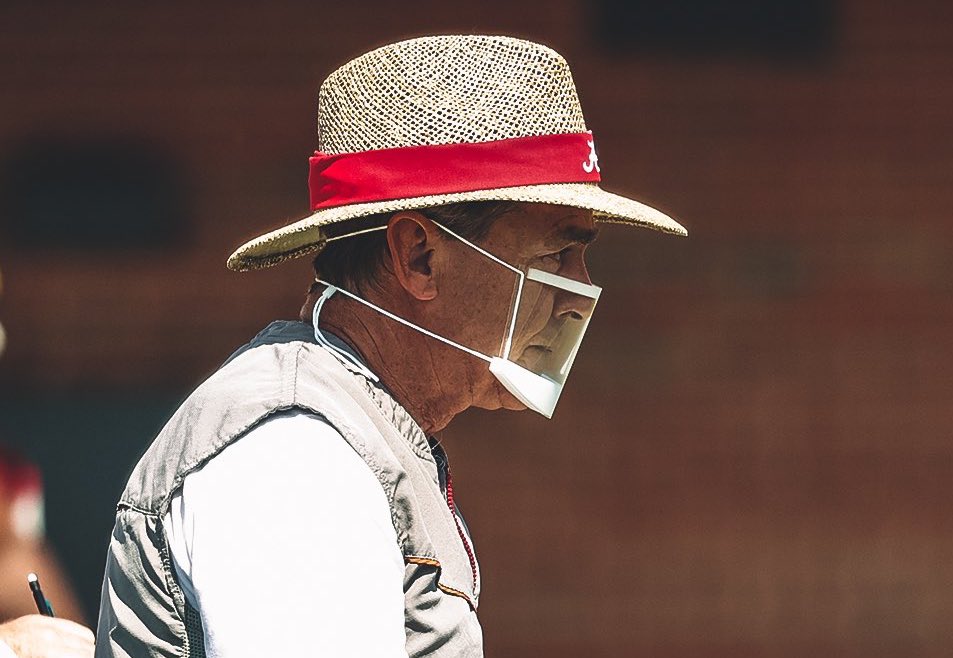
Other proponents include French secretary of state for people with disabilities Sophie Cluzel, who donned a mask with a see-through section to speak in parliament, and a sign-language interpreter at a Portsmouth hospital in southern England.
As Cluzel pointed out, the transparent window facilitates communication by permitting lip-reading and showing facial expressions.
The deaf and the hard of hearing number about 70 million globally, according to the World Federation of the Deaf.
According to AFP, the French federation of speech therapists says that classic facemasks mean “patients find themselves deprived of the main source of the oral message: the mouth and facial expressions.”
Teachers say they too like the transparent model.
Rory Burnham Pickett, a professor based in Sapporo in northern Japan, said:
“I know it is frustrating that my pupils don’t see my mouth or facial expression. I made my own transparent mask as they are difficult to find.”
Governments are taking a proactive approach and are placing orders.
Authorities in Quebec have placed an order for 100,000 for distribution across the health network in the Canadian province, local media say.
In the United States, private US medical firm ClearMask LLC said Tuesday it had received clearance from the Food and Drug Administration for a fully transparent surgical mask for use in hospitals and clinics but also schools, retail and hospitality settings.
The Baltimore-based form was already producing non-surgical versions.
Standing in a graveyard on the outskirts of Mexico City, guitar player Eberardo Vargas this week had fewer funerals to play at than he has for most of the coronavirus pandemic, Reuters reports.
Even as Mexico approaches a grim new milestone in its battle with the pandemic – 60,000 fatalities – signs of relief are beginning to emerge in the country that has registered more dead than any other bar the United States and Brazil.
Vargas, 49, said May, June and July were the busiest months he could recall as a musician as mourners in the municipality of Ecatepec northeast of Mexico City paid him and his band to hear favorite songs of lost loved-ones during their last goodbyes.
But that demand has eased lately as public life gradually returns to normal in the sprawling Mexican capital, prompting the government to declare this week that the coronavirus scourge is in “sustained decline” in Mexico.
“We sometimes had 10 or 15 performances a day at the peak of the pandemic, but it’s come down,” he said, who had little to do at the Ecatepec graveyard for much of Friday.
“Now, it’s more like three, or sometimes five.”

Deaths due to coronavirus are on track to hit their lowest weekly total for two months, and new cases have eased since reaching a record daily number at the start of August.
“Our whole band used to wait here, there was always work,” said Vargas. “Now, we take turns because it’s become so quiet.”
Still, the country is almost certain to cross the threshold of 60,000 dead this weekend.
Earlier in the pandemic, Mexico’s coronavirus czar and deputy health minister Hugo Lopez-Gatell had cast such a figure as a “catastrophic” outcome.
Despite the improving news, Mexico City mayor Claudia Sheinbaum said Friday there was no cause for complacency.
“This week we lost some momentum in the trend of falling number of infections and hospitalisations,” she said.
The French health ministry on Saturday reported 3,602 new coronavirus infections over the past 24 hours, a smaller rise than on Friday and after the increase in cases reached a post-lockdown high earlier in the week.
The ministry said the total coronavirus deaths in the country had risen by nine in the past 24 hours to 30,512.
The total of confirmed infection cases in France now stands at 238,002, while the number of people in intensive care units was up by 1, to 380.

US president Donald Trump on Saturday accused members of an alleged “deep state” at the Food and Drug Administration (FDA), without providing evidence, of working to slow testing of Covid-19 vaccines until after the November presidential election.
In a Twitter post, Trump said a deep state “or whoever” at the FDA was making it very difficult for drug companies to enroll people in clinical trials to test vaccines and therapies for coronavirus.
Donald J. Trump
(@realDonaldTrump)The deep state, or whoever, over at the FDA is making it very difficult for drug companies to get people in order to test the vaccines and therapeutics. Obviously, they are hoping to delay the answer until after November 3rd. Must focus on speed, and saving lives! @SteveFDA
August 22, 2020
The comment came after a top FDA official said on Thursday he would resign if the Trump administration approved a vaccine before it was shown to be safe and effective.
“Obviously, they are hoping to delay the answer until after November 3rd. Must focus on speed, and saving lives!,” Trump wrote, tagging FDA Commissioner Stephen Hahn in the tweet.
US House Speaker Nancy Pelosi said it was a “dangerous statement” and that the president was “beyond the pale” for accusing the FDA of playing politics.

The FDA could not immediately be reached for comment.
Drug manufacturers in coordination with the FDA and National Institutes of Health are ramping up production while testing is underway in order to respond as soon as possible with a vaccine for Covid-19, which has killed nearly 800,000 people worldwide.
Trump often uses Twitter to criticise federal agencies, sometimes accusing them of being controlled by the “deep state” in an apparent reference to long-serving staff who, in Trump’s eyes, are determined to undermine his agenda.
His tweet increases the pressure on the FDA after Peter Marks, director of its Center for Biologics Evaluation and Research, last week said on a conference call with government officials, pharmaceutical executives and academics that he would resign if the agency rubber-stamped an unproven vaccine.
Scientists, public health officials and lawmakers are worried that the Trump administration will push the FDA to approve a vaccine in advance of the vote, even if data from clinical trials do not support its widespread use.
Marks, whose division regulates cutting-edge biotech treatments, vaccines and gene therapies, told Reuters he has not faced any political pressure and that the FDA would be guided by science alone. Should that change, he said on Thursday, “I would feel obligated (to resign) because in doing so, I would indicate to the American public that there’s something wrong.”
The World Health Organization (WHO) said children aged 12 and over should wear masks to help tackle the corornavirus pandemic under the same conditions as adults, while children between six and 11 should wear them on a risk-based approach.
Children aged 12 and over should particularly wear a mask when a one-metre distance from others cannot be guaranteed and there is widespread transmission in the area, the WHO and the United Nations Children’s Fund (UNICEF) said in a document on the WHO website dated 21 August.
Whether children between six and 11 should wear masks depends on a number of factors, including the intensity of transmission in the area, the child’s ability to use the mask, access to masks and adequate adult supervision, the two organisations said, according to Reuters.
The potential impact on learning and psycho-social development, and the interactions the child has with people at high risk of developing serious illness, should also play a role.
Children aged five years and under should not be required to wear masks based on the safety and overall interest of the child, the WHO and UNICEF said.

Studies suggest older children potentially play a more active role in transmission of the new coronavirus than younger children, the WHO and UNICEF said, adding more data was needed to better understand the role of children and adolescents in the transmission of the virus, which causes Covid-19.
The WHO first advised people to wear masks in public on 5 June to help reduce the spread of the disease, but had previously not issued specific guidance for children.
More than 23 million people have been reported to be infected by the coronavirus globally since it was first identified in China last year and 798,997 have died, according to a Reuters tally.
The Rome region in Italy recorded 215 new coronavirus cases in the past 24 hours to Sunday, mainly because of people returning from holiday, the largest such rise since the Italian capital was in lockdown in March, health officials said Saturday.
The figure is a record number and is more than the 208 people infected in a one-day period on 28 March, when Rome had come to a virtual standstill to stop the coronavirus spreading, the capital’s health official Alessio D’Amato said.
“Sixty-one percent [of the cases] are linked to people returning from vacation,” D’Amato said, adding that almost half the cases were returning from Sardinia.
Sardinia had been spared the first wave earlier this year, but D’Amato said the movement of tourists and people partying have helped spread the virus.

Most of those infected are young people who are not showing symptoms and it is urgent to “block the chain of transmission as fast as possible by finding the asymptomatic and averting the spread of the virus among families, he said, according to AFP.
“Be very careful especially with your relatives and the people dearest to you,” he said in an appeal to the young.
He warned them to stay home and not meet with people while awaiting test results.
“Don’t feel invincible,” he urged them.
Italy, particularly the northern Lombardy region, the Venice area and Rome, are seeing a resurgence in the virus over the summer, even if the daily numbers remain below the national threshold of 1,000 – unlike in neighbouring France.
The Italian government has taken several steps to block the spread, suych as closing nightclubs since 17 August and making mask wearing compulsory in busy public spaces between 6pm and 6am.
Since the pandemic broke out, Italy has recorded more than 257,000 cases, including more than 35,000 deaths.
The Green Climate Fund (GCF) has promised developing nations it will ramp up efforts to help them tackle climate challenges as they strive to recover from the coronavirus pandemic, approving $879m in backing for 15 new projects around the world.
At a four-day virtual board meeting ending late Friday, the fund added Afghanistan and Sudan to a list of more than 100 countries receiving a total of $6.2bn to reduce planet-heating emissions and enhance climate resilience.
The GCF was set up under UN climate talks in 2010 to help developing nations tackle global warming, and started allocating money in 2015.
Executive director Yannick Glemarec said the fund had “a key role to play to maintain climate ambition in the era of Covid-19” and would aim to improve the speed and efficiency of its response to developing country needs.
Board co-chair Nauman Bashir Bhatti, from Pakistan, said climate finance would be crucial for recovery from the pandemic and the fund needed to increase support “even during these difficult times”.
Those promises came as small island states criticised the pace and size of GCF assistance, saying they were now struggling with the economic blow from the pandemic on top of climate change impacts such as rising seas and stronger storms.
Fiji’s UN ambassador Satyendra Prasad said Covid-19 risked worsening the already high debt burden of small island nations, as tourism dived.

“The importance of the [GCF] … in accelerating transformative climate action in this present decade cannot be understated,” he added.
He told the Thomson Reuters Foundation island nations were struggling to access other sources of finance and urged the GCF to boost aid to help them prepare project proposals and to release funding for approved projects faster.
The Alliance of Small Island States said its members represented less than 10% of total funding requests.
Italy reported 1,071 new coronavirus infections in the past 24 hours, the health ministry said on Saturday, exceeding 1,000 cases in a day for the first time since May when the government eased its rigid lockdown measures.
Italy, one of Europe’s worst-hit countries, managed to contain the outbreak after a peak in deaths and cases between March and April.
However, the country has seen a steady increase in infections over the last month, with experts blaming gatherings of people associated with holidays and nightlife.
Last time the country recorded a higher figure was on 12 May, with 1,402 cases, six days before restaurants, bars and shops were allowed to reopen after a 10-week lockdown, Reuters reports.

Read the original article at The Guardian