Covid-19 increase detected in some US states as restrictions wind down
As the US enters the heat of summer and coronavirus restrictions start to wind down, public health experts are already noticing a concerning trend – an uptick in Covid-19 cases in parts of the country.
A resurgence in new infections has been detected in states including Florida, Texas and California, as authorities restart normal rhythm of life by allowing certain businesses and public places to reopen.
On Sunday, Florida recorded more than 1,000 newly-diagnosed Covid-19 cases for the fifth day of the previous week, with Thursday’s total of 1,413 the highest since the state started providing daily updates in March.
In Texas, officials in Dallas said the city hit its highest ever one-day total for new infections on Thursday, at 285, while Houston has also recorded climbing numbers.
California saw a 40% rise in cases last week, with large cities including Los Angeles, which has the highest number of cases in the state, and San Francisco lifting restrictions on traveling and access to beaches.
Arizona, meanwhile, has seen one of the largest jumps in the country, with the daily total in new cases breaking the state record on four separate occasions over the past week.
Doug Ducey, the Arizona governor, who relaxed restrictions two weeks ago, has put the increase down to an increase in testing and insisted that his approach on reopening has been prudent.
The overall number of new cases recorded each day across the US is hovering around 20,000, down from a peak of 30,000 in April, but this decrease is mainly due to the improving situation in the worst-hit states, such as New York and New Jersey.
As states in the north-east experience drops in new cases, states across the south and California are seeing increases even as they loosen social distancing rules designed to prevent person-to-person transmission of the virus.
Donald Trump has mostly vacated pandemic response to individual states and has not addressed the crisis in a major way even as the death rate passed 100,000 Americans.
Given the lag in incubation times of the virus, it appears the rise in cases has occurred around the time states started to lift restrictions, leading to scenes in the weekend leading up and including the 25 May Memorial Day holiday, where people flocked to beaches and lakes and in many cases did not practice social distancing.
“We’re very concerned that our public health message isn’t resonating,” admitted Robert Redfield, head of the Centers for Disease Control and Prevention (CDC) in a congressional hearing last week. “We continue to try to figure out how to penetrate the message with different groups.”
Florida is pushing ahead with the second phase of reopening, where bars and movie theatres can accept customers, in what governor Ron DeSantis has called a “safe, smart, step-by-step approach”, while Texas is now allowing almost any business to operate at 50% capacity.
Epidemiologists have warned the onward march of reopening will make it difficult to keep a lid on infections if an American public weary of lockdown is again asked to isolate themselves.
“The worrisome thing for me is that there’s a lot of fatigue in the population overall,” said Wafaa El-Sadr, professor of epidemiology at Columbia University.
“People feel they have done distancing and they are thirsting to get outside and connect with each other. If this surge requires us taking a step back, how do we convince people to do that? I feel we’ve made five steps forward and now maybe one step back.”
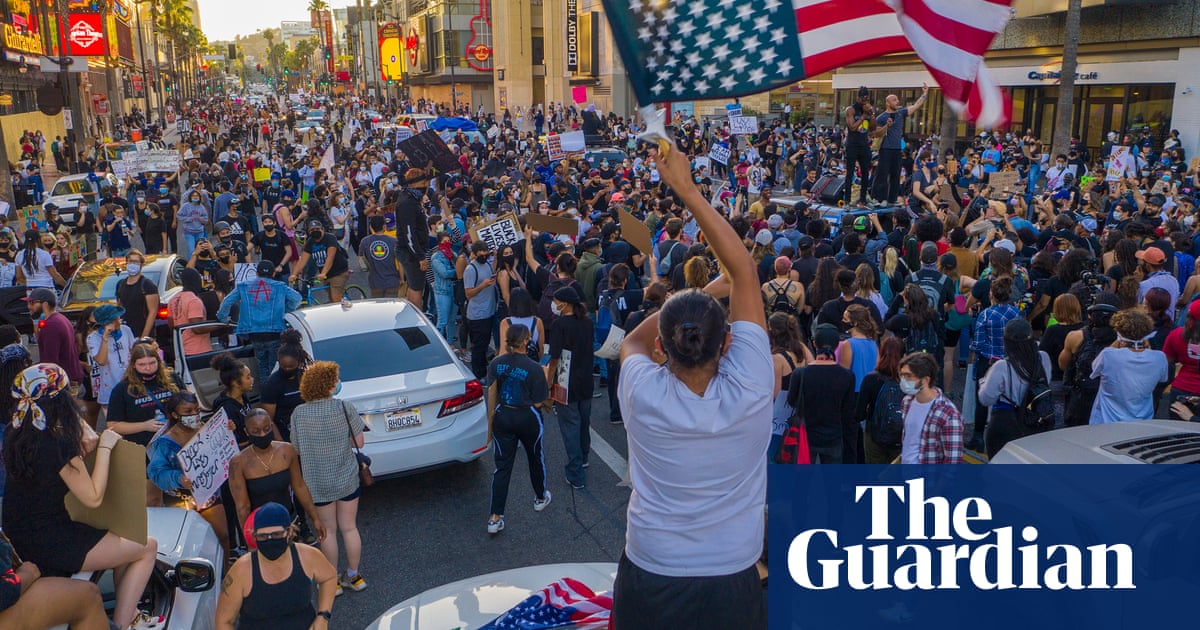
The uptick is likely to be exacerbated by the large protest gatherings across the US in recent weeks over the death of George Floyd at the hands of police.
While the protests have largely been outdoors, less risky than indoor gatherings, the act of shouting and chanting can spread droplets containing the virus. Pepper spray and teargas fired by police can induce coughing in protesters, which can also spread the disease.
It’s unclear how strong the latest outbreak will be, although experts point out most states have helped encourage new social distancing or mask-wearing behaviours, as well as shielding the most vulnerable people.
Testing rates have also ramped up over the past month, although states still lack a comprehensive system to track, trace and isolate those who have come into contact with an infected person.
“All the modeling has shown if you reopen without extensive testing and contract tracing, you’ll see an increase in the epidemic,” said Ira Longini, professor of biostatistics at the University of Florida. “That activity is not happening in an organized way in Florida, it’s haphazard. That points towards an increase over summer and then a potentially much bigger increase in the fall.”
Longini said that less than 2% of Florida’s population has been infected, meaning the vast majority of the state’s population will still be susceptible to Covid-19. “There’s no sign the epidemic is going away in Florida, if anything it’s increasing,” he said.
“I’m worried the crisis will run on and on, unless a miracle happens. That said, there is a saying that if you’ve seen one flu epidemic, you’ve seen one flu epidemic. There’s a lot of unpredictability.”
Read the original article at The Guardian