European shares fall as optimism fades on coronavirus lockdown easing – business live
The commute in London is going to be very different in coming weeks as people return to work, according to Transport for London. It said the number of pepole travelling on its network will cut by at least 85%, as it unveiled a series of new measures. On Sunday night, Boris Johnson urged construction and manufacturing workers to return to work, along with people who cannot work from home.
TfL stressed that Londoners must continue working from home wherever possible to limit numbers on public transport; people should walk or cycle and shop local. It urged employers to help their staff avoid travelling at the busiest times of day. Passengers should cover their faces, carry a hand sanitiser and wash their hands before and after travelling.
Hand sanitiser points will be installed over the coming weeks at every tube, bus and rail station. TfL has already introduced more frequent deep cleaning of its transport network using hospital-grade cleaning substances that kill viruses.
Passengers should maintain a 2m distance “wherever possible”. This means that TfL will only be able to carry 13% to 15% of the normal number of passengers on the tube and buses. It will put up new social-distancing posters at bus stops, stations and in shelters, and create two-metre floor markings on platforms at stations.
The London mayor, Sadiq Khan, said all TfL frontline staff will be offered basic face masks from today.
I urge all Londoners to rethink the way they travel. Please avoid peak times, wear a non-medical covering over your nose and mouth and carry a hand sanitiser. By rapidly rolling out more space for walking and cycling through our London Streetspace plan we are enabling many more journeys to be made through these sustainable means which is crucial to our city’s recovery.
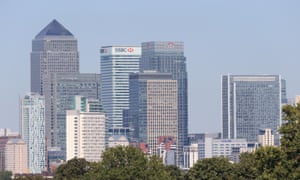
TheCityUK, a lobby group for the financial services sector, has written to the Bank of England governor, Andrew Bailey, to warn that UK businesses are racking up an “unsustainable” debt mountain of £90bn to £105bn because of the Covid-19 pandemic.
Loans issued under the coronavirus business interruption loan scheme (CBILS) could contribute £10bn to £20bn. To address the debt pile, firms will need to issue new equity and/or restructure their borrowings, TheCityUK says.
The group says:
If left unresolved, these levels of unsustainable debt could inhibit employment, research and development, investment and ultimately a smooth economic recovery back to growth.
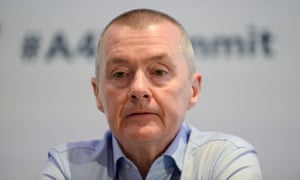
Walsh has questioned why the UK plans to impose a lengthy quarantine period for travellers arriving by air.
The introduction of a 14-day quarantine period for air travel is a surprise because it appears that the government is not going to apply a quarantine period for people who come into the UK by other means of transport.
I don’t understand that but maybe the prime minister will be able to clarify the science behind that. It seems strange to me.
But we will have to review the impact of that and make an assessment in terms of the capacity that we’re likely to operate if a quarantine period applies. At this stage, I would imagine that our capacity into and out of the UK would be pretty minimal in that event.
The FTSE 100 is now trading some 20 points lower at 5,915, a drop of 0.35%, after rising earlier in early trading to close to 6,000. Optimism over the UK government’s lockdown easing has dissipated, especially as the latest measures were somewhat vague. We are still awaiting clarity on the quarantine period for travellers arriving in Britain from abroad, for example.
The boss of IAG, which owns British Airways and Iberia, said this morning that the company is burning through cash quickly and is struggling to raise more funds, as its planes remain grounded because of the coronavirus pandemic.
Willie Walsh told MPs on the transport committee:
We’ve probably exhausted every avenue that I can think of at this stage to shore up our liquidity. The cash has been reducing significantly and that will be the case as we go through May, June and July. We’re not taking in any revenue.

Tui, the world’s biggest travel firm, has laid out a 10-point plan for reopening its hotels – which could mean the end of the self-service buffet and football tournaments at holiday destinations.
1) Online check-in: Holidaymakers check in in online via the hotel’s website or via their smartphone.
2) Distance rule: In public areas such as in the restaurants, corridors or gyms, all employees are required to keep a distance of 1.5 to 2m between them and the guests. For example, tables in restaurants will only be cleaned when guests have vacated them.
3) Personnel planning: Staff will work together in fixed teams in order to reconstruct possible infection chains.
4) Restaurant: To limit the number of guests in restaurants, capacities will be significantly reduced. Tables will be set up at a minimum distance of 1.5m apart.
5) Extension of opening hours: In order to provide sufficient space for all guests, the opening hours of restaurants and other hotel facilities will be extended.
6) Entertainment and activities: Only events, sports and entertainments involving a small number of participants and without close contact will be made available. Golf or tennis, for example, can take place, but football tournaments cannot. The spa offer will be adapted and childcare will be organised according to new standards.
7) Expansion of disinfectant dispensers: The number of dispensers will be significantly increased so that guests and employees can disinfect their hands at all important contact points. For example, all locations where food and drink is offered, sports facilities and in the lobby area.
8) Room cleaning: Extensive new cleaning practices will be put in place. All rooms will be thoroughly deep cleaned before the arrival of guests. The most frequently used areas, such as bathrooms, and most used devices and appliances like TV remote controls will receive particular attention.
9) Restriction of self-service: Self-service offers such as buffets will be reduced to a minimum. Wherever possible, food and beverages will be served to guests by staff wearing protective masks.
10) Training by independent auditors: Tui will train all employees in its own hotels. The first training documents will be made available this week.
Sebastian Ebel, the member of the Tui’s executive board responsible for Holiday Experiences, says:
Customer surveys clearly indicate that safety and hygiene will be of paramount importance for holidaymakers after the lockdown.
With our group-wide, integrated health and safety management system, we can ensure that our hotels meet guests’ high expectations and offer the best possible protection against infections during these unusual times. We are laying the foundations for an agile and safe return to business so we can be ready to offer our unique holiday experiences again as soon as possible.

EasyJet is the biggest faller on the FTSE 100 index, with the shares tumbling about 7%. Analysts at Citi reckon the budget airline may have to raise between £700m and £1bn, after Boris Johnson said the UK government would impose a quarantine on travellers arriving in Britain. The quarantine period is expected to be 14 days and could be imposed as soon as the end of May.
British Airways owner IAG may also have to raise funds, the analysts said. IAG shares initially fell more than 4% and were later down 2.5%.
The analysts said:
Last night’s initiative by the government will have two significant consequences for the UK airline industry: The sizeable monthly cash burn rates will persist through summer [and] a number of customers and industry bodies will increase the volume on their demands for immediate cash refunds to consumers.

Back in the UK, shares in Halfords have been boosted by the government’s announcement that people should cycle to work, if possible, to avoid close contact on public transport.
Shares in Halfords jumped as much as 24%, and were later up 18% at 178.7p. It is Britain’s biggest cycling retailer and runs 450 repair centres, and is also the market leader in electric scooters.

On Saturday, the transport secretary Grant Shapps said roads would be changed to accommodate more cyclists. He also said e-scooter trials would be brought forward, and rental e-scooters could hit UK roads as early as June. Electric scooters – which can travel at up to 15.5mph – are currently banned on roads and pavements in the UK.
Read the original article at The Guardian