Government rows back on 1 June English primary schools reopening plan
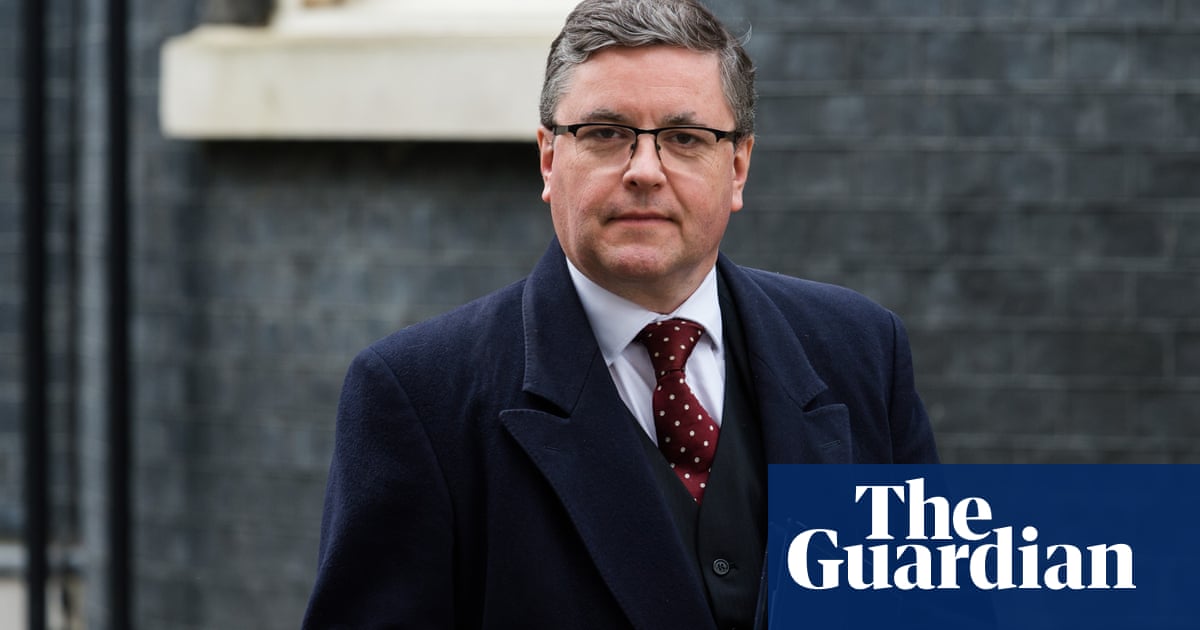
The government has appeared to row back from its position on reopening primary schools in England, insisting 1 June is not a fixed date and that ministers need to listen to the concerns of councils and teachers.
The justice secretary, Robert Buckland, struck a conciliatory note on Wednesday during a series of media interviews in response to a growing backlash against the government’s policy of lifting the coronavirus lockdown on schools in less than a fortnight.
The government has said it wants children in nursery, reception, years 1 and 6 to begin a phased return to schools from 1 June with other years following soon after, so primary children are in school for a month before the summer holidays, as long as the government’s five tests for easing lockdown have been met.
Q&A
Coronavirus: should everyone be wearing face masks?
The World Health Organization (WHO) guidance on face masks has remained consistent during the coronavirus pandemic. It has stuck to the line that masks are for healthcare workers – not the public.
“Wearing a medical mask is one of the prevention measures that can limit the spread of certain respiratory viral diseases, including Covid-19. However, the use of a mask alone is insufficient to provide an adequate level of protection, and other measures should also be adopted,” the WHO has stated.
Nevertheless, as some countries have eased lockdown conditions, they have been making it mandatory to wear face coverings outside, as a way of trying to inhibit spread of the virus. This is in the belief that the face covering will prevent people who cough and sneeze ejecting the virus any great distance.
There is no robust scientific evidence – in the form of trials – that ordinary masks block the virus from infecting people who wear them. There is also concerns the public will not understand how to use a mask properly, and may get infected if they come into contact with the virus when they take it off and then touch their faces.
Also underlying the WHO’s concerns is the shortage of high-quality protective masks for frontline healthcare workers.
Nevertheless, masks do have a role when used by people who are already infected. It is accepted that they can block transmission to other people. Given that many people with Covid-19 do not show any symptoms for the first days after they are infected, masks clearly have a potential role to play, especially on crowded public transport as people return to work..
Sarah Boseley Health editor
In recent days, however, a growing number of councils across the country have said they will not meet the government’s deadline and teachers’ unions remain defiant, expressing continuing dissatisfaction with government reassurances about safety.
In an interview with BBC Radio 4’s Today programme, the minister stressed the government was in listening mode: “We’ve got to listen to what we are being told and also to engage and to persuade and to make sure the necessary arrangements are in place. The government always said that we hoped that 1 June would be the date. It was conditional.”
In another interview with BBC Breakfast, Buckland acknowledged teachers’ safety concerns. “I don’t think any of us want to put either children or our dedicated teaching staff in any danger at all, and the question of being safe is clearly paramount.
“So we’re all working towards 1 June and planning for that return, but I accept the point that there may well be issues from employers that need to be addressed which might not mean we’ll see a uniform approach on 1 June.”
He added: “It really depends on the views of employers. A lot of councils are direct employers of teaching staff, their views are clearly very important. I’m not going to sit here and pretend that suddenly on 1 June everything will be uniform, I don’t know, it’s my hope.
“But these conversations need to continue and we need to listen very carefully to the concerns of employers and staff.”
As the number of deaths in care homes reaches 11,600, the justice secretary also addressed questions about coronavirus testing, saying
the NHS had been chosen as the focus instead of care homes and that was “right and essential” so as not to overwhelm hospitals.
He told Sky News: “I think we rightly emphasised the importance of making sure our NHS services, our hospitals, were places that would continue to admit patients and wouldn’t be incubators of the disease.
“We achieved that. We protected our NHS.”
Asked if the government focuson the health service had been to the detriment of care homes, Buckland replied: “I think we needed to make a choice about testing and we did decide to focus upon the NHS.
“I think the issue with care homes is that we’ve got many thousands of different providers, different settings. There have been lots of examples of care homes that have mercifully stayed infection free but sadly far too many cases of infection and then death. ”
Asked to clarify his policy that the strategy was “focus on the NHS first and foremost”.
He said: “That’s right and I think that was absolutely essential.”
Earlier this month, deaths in care homes accounted for 40% of all coronavirus fatalities in England and Wales, according to data from the Office for National Statistics.
Prof Martin Green, of Care England, has said those at risk of catching coronavirus and dying should have been a priority from the beginning of the outbreak.
Deaths in care homes from coronavirus account for about of quarter of the total fatalities from the virus.
However, Buckland later said that choosing between health settings and care was not a “binary choice” for the government.
In an interview with ITV, he said: “We’ve been told time and time again rightly that hospitals are not the best settings for older people in terms of recovery. Therefore I don’t think anybody is to be blamed for wanting to get residents back into a familiar setting.
“Looking at it in terms of the evidence I think to suggest there was somehow a binary choice is an entirely false dichotomy.”
Liz Kendall, Labour’s minister for social care said: “This is the clearest admission yet that ministers did not give care homes the protection they needed at the start of this pandemic.
“Social care and the NHS are both equally important in the fight against this virus and are inextricably linked. One cannot be prioritised above the other.
“Ministers must give social care the resources, support and attention it needs to stop the spread of this awful virus.”
Read the original article at The Guardian