Markets hit by UK quarantine move and China retail sales fall – as it happened
And finally, after a turbulent day the FTSE 100 index has closed down 1.5%.
The blue-chip index lost 93 points to finish at 6,092, wiping out the gains earlier this week.
Travel companies led the losers, withe IAG finishing 4.4% lower, TUI shedding 8.3% and easyJet off 7.2%.
Jet engine maker Rolls-Royce (-3.5%) and aerospace engineer Melrose (-3.3%) were also among the big fallers, reflecting fears that the airline industry will not recover quickly from the pandemic.
Shares also fell across Europe, with France’s CAC dropping by 1.3%. But overall, European shares gained 1.3% during the week.
Investors have plenty to ponder over the weekend, though. Does the slowdown in US retail sales growth, weak consumer confidence, rising Covid-19 cases, travel bans and underwhelming Chinese spending and industrial production data shows that the recovery is faltering?
Have a lovely weekend. GW
Back to the US…and the increase in retail sales last month has lifted consumer spending back to pre-pandemic levels.
Mamta Badkar (@mamtabadkar)
Ton of US econ data this morning 1. Retail sales back at pre-pandemic levels in July even as spending cools 2. Productivity up by the most since 2009 3. Industrial production up for third month 4. Consumer sentiment levels off on ‘policy gridlock’ t.co/PC7q7StTwnpic.twitter.com/8kYukFlyWm
August 14, 2020
Larry Adam (@LarryAdamRJ)
Retail Sales Increase! With the 1.4% MoM increase in July, the retail sales control group is now rising at the fastest YoY pace (+8.0%) since 1999. From a historical standpoint, this gain is impressive and suggests that fiscal stimulus has helped to support consumer spending. pic.twitter.com/nFBzakaa0Z
August 14, 2020
However, as noted earlier…. Americans may be spending more, but they’re not as optimistic as before.
jeroen blokland (@jsblokland)
‘Yes’, retail sales volume is back at all-time highs (buying all those new laptops, disinfectants and Netflix subscriptions with government-sponsored money), but consumer #confidence remains very subdued!
With an hour to go until the close, European markets are still solidly in the red.
The FTSE 100’s hovering around 6086, a drop of 99 points (-1.6%), with travel and leisure companies still doing the damage.
Connor Campbell of SpreadEx says it’s been an ‘increasingly nasty session’:
Though markets shook off the week’s – admittedly long-teased – second quarter GDP contraction in the UK, a worse than forecast Chinese retail sales reading seemed to pose more of a problem for traders. This was further compounded by a retail sales miss out of the US (though the core figure did improve on estimates).
The real issue in Europe, however, was the latest quarantine decision from the UK government, removing France, like Spain, from its travel corridor. And with reports Macron could do the same in retaliation, investors received an unwelcome reminder that countries may have ran before they could walk with things like holidays.
Just in: US consumer confidence has improved slightly this month, but remains low.
The University of Michigan’s consumer sentiment index has risen to 72.8 for August, up from 72.5 in July.
Before the pandemic struck, it had been steadily in the 90-point region.
Steven Rattner (@SteveRattner)
Consumer sentiment remained weak in Aug as renewed shutdowns weighed on optimism about future prospects & unemployed Ams had to reckon with a lapse of income support. pic.twitter.com/sPRBUtiLgv
August 14, 2020
Anxiety over the economic cost of the pandemic is weighing on Wall Street as trading begins.
The benchmark S&P 500 has opened a little lower, having nearly hit record highs earlier this week. Technology stocks, though, are holding up better.
Companies beyond the travel industry who are vulnerable to fresh lockdown restrictions are also falling today.
GVC, the betting firm behind Ladbrokes Coral, is down 3.1%. It was hurt by the cancellation of sporting events during the pandemic.
Publishing and exhibitions group Informa, which was forced to cancel conferences this year, has dropped by 3.7%.
Second-hand car dealer Autotrader is also down by 3.2%; there will be less demand for vehicles the longer people work from home rather than returning to the office.
Nearly £2bn has been wiped off Europe’s travel and leisure industry today.
The Stoxx 600 Travel and Leisure index (which was worth €95.5bn last night) is currently down 2.3%, showing the impact of the travel restrictions.
Top fallers are companies exposed to the new UK quarantine rules, including budget airlines easyJet (-8%) and Ryanair (-4.6%) , holiday operator TUI (-7.4%), BA’s parent IAG (-5.8%), and hotel operator Whitbread (-3.3%).
Some snap reaction to the US retail sales figures:
jeroen blokland (@jsblokland)
BREAKING! US retail sales rose by 1.2% in July, slightly below expectations. Ex autos retail sales rose 1.9%, more than expected. YoY sales up 2.7% pic.twitter.com/xGKFozV2KR
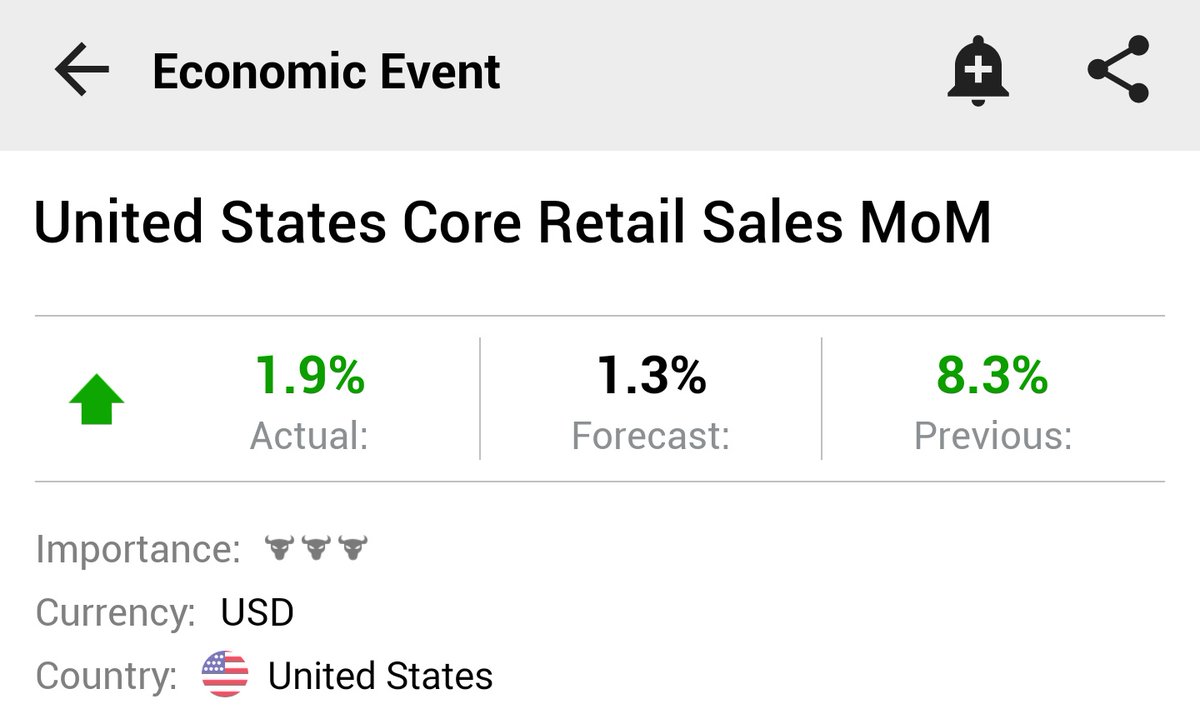
*U.S. CORE RETAIL SALES JUMP 1.9% IN JULY, BEATING FORECASTS FOR GAIN OF 1.3% pic.twitter.com/jwjV6fPhvZ
August 14, 2020
JamesVGrimaldi (@JamesVGrimaldi)
Worse than expected: July retail sales rose 1.2%. That’s a slow-down after brisk gains. Failure of Congress to approve additional coronavirus relief believed to have undermined U.S. consumer spending t.co/tub16KnGJT via @WSJ
August 14, 2020
Just in: Retail spending across the US rose in July, but not as much as expected.
Retail sales jumped by 1.2% in last month, compared to June — when they had surged by 8.4%.
Economists had expected a rise of almost 2%, so this indicates that the US economy isn’t recovering as fast as hoped (like in China).
Sales of cars, and auto parts, fell by 1.2% during the month, pulling the headline number down. Strip that out, though, and retail sales actually beat forecasts with a rise of 1.9%.
Reaction to follow…
Here’s my colleague Richard Partington on the weak Chinese retail sales figures:
Fears over the strength of China’s economic recovery from the coronavirus pandemic have been raised after retail sales slumped in July and industrial production remained subdued.
Fuelling concerns for the world economy, retail sales in China dropped in July by 1.1% compared with the same month a year ago, missing predictions for a small increase in consumer spending.
As the first country to be hit by the Covid-19 pandemic, and the first to ease lockdown rules, the world’s second-largest economy is seen as a bellwether for other nations battling to save jobs and reboot growth.
Separate figures showed industrial output grew 4.8% in July from a year earlier, the same level as recorded in June but less than the 5.1% increase estimated by City economists.
Wall Street is expected to follow Europe’s lead when trading begins in 90 minutes:
But first….the latest US retail sales figures, due in half an hour, could change the mood.
Our main Covid-19 liveblog has all the details on the quarantine changes, including the prospect that France imposes its own restrictions in return.
France’s European affairs minister, Clément Beaune, tweeted that the government regretted the British decision that “will lead to a reciprocal measure”, while adding “hoping for a return to normal as soon as possible”.
Transport minister Jean-Baptiste Djebbari echoed these words, tweeting: “I told my counterpart Grant Shapps of our willingness to harmonise health protocols to assure a high level of protection on both sides of the channel.”
The record-breaking slump in eurozone employment in the last quarter (see here) has wiped out swathes of jobs created since the last recession.
And with nearly 5 million jobs already lost, many more are at risk as governments move towards winding up their job retention schemes.
Bloomberg has the details:
The coronavirus pandemic has wiped out nearly half of the 12 million euro-area jobs created in the seven years since the last recession, in another sign of the enormous damage wreaked on the economy.
Employment slumped by 4.9 million in first half of the year, almost all in the second quarter when the most stringent measures to contain the spread of the virus were in place.
More declines are likely. Generous furlough programs across the 19-nation bloc have so far contained the fallout on the labor market from a record economic contraction, with a rise in unemployment that is more modest than in the U.S.
Governments are now facing tough choices on how to wind down those programs though, as they weigh ballooning debt against the consequences of massive job losses for the economy.
European stock markets are all solidly in the red as lunchtime approaches.
The FTSE 100 is currently down 1.8%, with travel shares worst hit on a bad day for stocks. IAG is currently down 5.5%, with easyJet shedding 6.4%.
France’s CAC index is down nearly 1.9%, with the UK’s new quarantine rules casting a pall over the bourses.
Investors are worried that the Covid-19 crisis is entering a new phase, with cases rising in some European countries this week.
Alastair George, head strategist at Edison Investment Research, says:
“What we have got is a significant amount of uncertainty over the evolution of coronavirus pandemic, which is maintaining a risk premium for the transportation, leisure and hospitality sectors.”
Here’s the damage:
Photograph: Refinitiv
Markets are also concerned that China’s economy isn’t rebounding faster, with retail sales falling year-on-year in July for the seventh month in a row (see opening post for details).
There’s also disappointment that US politicians haven’t agreed a new stimulus package to help America’s economy. The two sides remain deadlocked over the size of the package, and about how much help to provide to unemployed Americans.
In a worrying twist, president Trump is now opposing additional funding for the United States Postal Service (USPS) in order to make it more difficult to deliver mail-in ballots.
Raffi Boyadjian, senior investment analyst at XM, says hopes of a quick deal are fading:
A deal on a new coronavirus relief package looked increasingly out of reach as US Senators left Washington for the summer recess, pushing the likely timing of an agreement to September when both houses return. A last-ditch attempt on Wednesday to resume talks went nowhere with Republicans refusing to meet Democrats halfway for a $2 trillion stimulus package and President Trump yesterday saying he would block any deal that contains additional funding for the Post Office.
Trump is strongly opposed to the use of mail-in voting for the forthcoming presidential election out of fear that it may harm his prospects of defeating his Democratic foe Joe Biden. His objection to any extra funds for the Post Office that would help expand voting by mail could further scupper the chances of reaching a bipartisan compromise.
While it’s possible that some negotiations may take place before the Senate reconvenes on September 8, the odds of a deal before then are slim.
Denmark and Finland have joined the ranks of countries whose economies shrank last quarter.
Denmark suffered a historically bad drop in GDP, down 7.4% in April-June during the lockdown. Finland was less badly hit, contracting by 3.2%.
That’s actually better than the EU average, of an 11.7% decline,and is less severe than neighbour Sweden (which took a more relaxed approach to Covid-19 lockdowns, and shrank by 8.6%)
Linda Yueh (@lindayueh)
Finland & Denmark posted better economic performance in the second quarter than Sweden despite their lockdowns: Finland GDP -3.2% Denmark GDP fell by record 7.4%
But the Nordic countries fared better than Sweden, whose economy contracted 8.6%https://t.co/npqCGGdnd4
August 14, 2020
Richard Milne (@rmilneNordic)
Finland’s economy best performer in Europe so far in Q2 while Denmark’s GDP contracts by record amount. Both had lockdowns, both did better than neigbouring pic.twitter.com/8pRhsSeD0B
The UK travel industry has warned that the new restrictions on travel to France is a “devastating blow” and will lead to job losses.
My colleague Gwyn Topham has the details:
Airlines UK, which represents the biggest carriers, said the decision was “another devastating blow to the travel industry already reeling from the worst crisis in its history”.
It urged the government to bring in a new testing regime and change its approach to quarantine to end its “broad-brush, weekly stop-and-go changes to travel corridors at a national level, which have proven so disruptive to airlines and passengers alike.”
The travel association Abta said the news would result in livelihoods being lost unless the government could help the industry. A spokesman said: “The announcements relating to Spain and now France impact the two biggest destinations for British holidaymakers at the height of the summer season. At this time of recession, a plan is urgently needed to protect the 221,000 jobs the travel industry sustains.”
The British Ports Association said it was “extremely disappointing news” that would cause much disruption and hit passenger operators hard.