Record drop in A&E attendance in England ‘a ticking timebomb’, say doctors
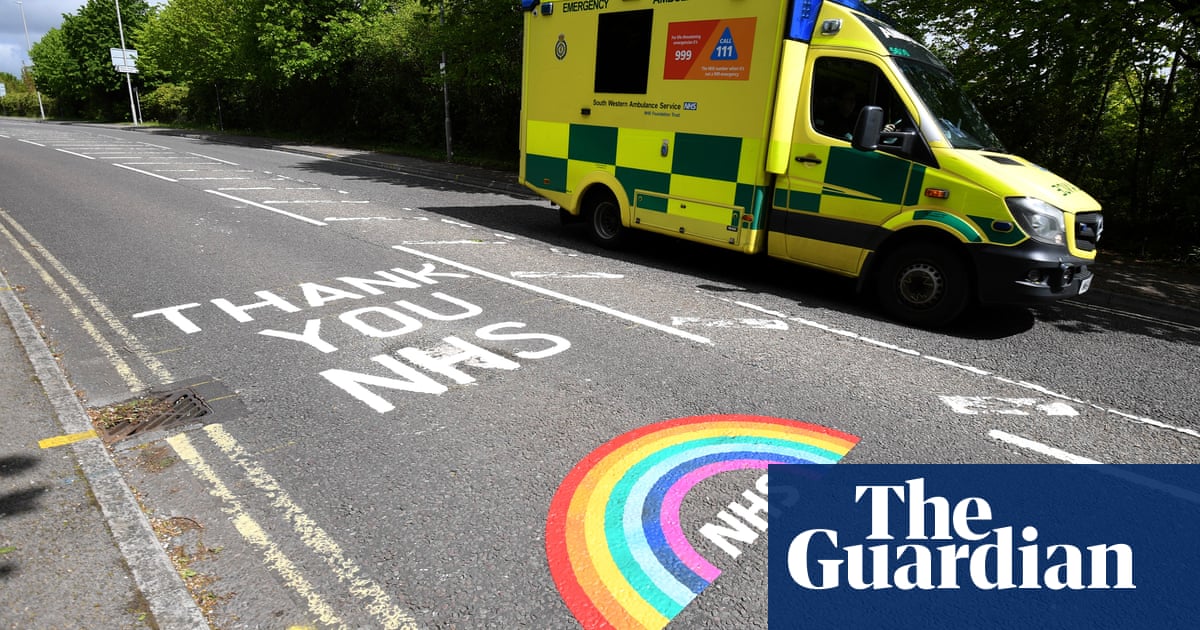
Doctors are warning of “a ticking timebomb” of untreated illness because of coronavirus fears after the latest figures showed the lowest number of people in at least a decade sought A&E care in April.
Just 916,581 people in England attended any kind of A&E unit last month. That was the fewest since records began in 2010 and is 57% down on the April 2019 figure.
The number of people admitted to hospital in April as an emergency after attending A&E was also the lowest ever, at 326,581 – 39% down on the 535,236 admitted in April 2019.
The figures have fuelled concerns that many thousands of people with potentially life-threatening ailments such as heart or asthma attack, stroke or sepsis failed to seek care.
“The sustained drop in A&E attendances is a significant concern given that many of those who have put off coming to hospitals as long as they possibly could during the first wave will be seeking treatment and could potentially be in worse conditions,” said Dr Nick Scriven, the immediate past president of the Society for Acute Medicine, which represents many hospital specialists.
“This is a ticking timebomb in itself and it will be exacerbated by a myriad other pressures in the coming weeks as hospitals adapt to running parallel units for infected or possibly infected acute work alongside elective work.”
Potentially large but still unknown numbers of patients are also thought to have not sought help at A&E for delirium, broken bones and a worsening of their already serious breathing problems.
While some of those who did not attend A&E may have got care elsewhere, such as at a GP surgery or pharmacy, the 39% year-on-year fall in emergency admissions to hospital has prompted serious concern in the NHS about people suffering serious consequences from untreated illness.
“The fall in emergency admissions means there are loads and loads of people that are staying away from A&E who really ought to come in. That’s a real worry,” said one NHS source.
“They are likely to be people with strokes, heart attacks, sepsis, delirium, severe asthma attacks, broken bones and exacerbations of chronic obstructive pulmonary disease.”
There is no official explanation for such dramatic falls. But NHS England chiefs believe widespread fear of going to hospital, in case people caught coronavirus, and a desire not to add to pressures on the health service when it was getting to grips with the pandemic are mostly to blame.
It has become so concerned by the likely still-hidden toll of illness, injury and death as a result of the mass avoidance of A&E that Covid-19 has triggered that it recently launched a campaign urging people to seek NHS care in the normal way despite hospitals’ focus on the disease.
Doctors believe the unprecedented fall in A&E attendances is the result of many people being scared of going to a hospital in case they became infected, perhaps as a result of being admitted.
There is a view that some people may also have put off going either because they did not want to bother NHS staff when they were so busy treating people with Covid-19, or because they thought that hospitals were too focused on that to prioritise their ailment too.
The 916,581 A&E attendances in April were far below the usual monthly average of about 2.1 million, which has been creeping up in recent years as a result of the growing and ageing population. The largest number ever in a single month was recorded last July – 2.265 million.
The sharp fall in emergency admissions is also striking. Usually there are more than 500,000 a month. But just 427,921 occurred in March, when hospitals reorganised their services to deal with a sudden influx of people with Covid-19, and that fell again to last month’s record low of 326,581.
Q&A
Coronavirus: should everyone be wearing face masks?
The World Health Organization (WHO) guidance on face masks has remained consistent during the coronavirus pandemic. It has stuck to the line that masks are for healthcare workers – not the public.
“Wearing a medical mask is one of the prevention measures that can limit the spread of certain respiratory viral diseases, including Covid-19. However, the use of a mask alone is insufficient to provide an adequate level of protection, and other measures should also be adopted,” the WHO has stated.
Nevertheless, as some countries have eased lockdown conditions, they have been making it mandatory to wear face coverings outside, as a way of trying to inhibit spread of the virus. This is in the belief that the face covering will prevent people who cough and sneeze ejecting the virus any great distance.
There is no robust scientific evidence – in the form of trials – that ordinary masks block the virus from infecting people who wear them. There is also concerns the public will not understand how to use a mask properly, and may get infected if they come into contact with the virus when they take it off and then touch their faces.
Also underlying the WHO’s concerns is the shortage of high-quality protective masks for frontline healthcare workers.
Nevertheless, masks do have a role when used by people who are already infected. It is accepted that they can block transmission to other people. Given that many people with Covid-19 do not show any symptoms for the first days after they are infected, masks clearly have a potential role to play, especially on crowded public transport as people return to work..
Sarah Boseley Health editor
Data also shows the number of patients waiting to start treatment at the end of March was 4.2 million, down from 4.4 million in the previous month.
The UK lockdown was announced on 23 March.
Separate figures from NHS England show the volume of calls to the NHS 111 service in April were up slightly on the same month in 2019, after a surge in March. An average of 55,200 calls a day were made in April 2020, 14% higher than the average of 48,400 a day in April 2019.
This compares with an average of 95,600 calls a day in March 2020 – more than double the average for March 2019.
Read the original article at The Guardian