UK vacancies halve and pay falls as Covid-19 lockdown hits economy – business live
After soaring yesterday, European stock markets are a more mixed picture today.
The UK’s FTSE 100 has dropped by about 0.5% to 6020 points, having surged over 4% on Monday. Italy and Spain’s markets have dropped by around 2%

Yeterday’s rally was driven by biotech firm Moderna reporting early Covid-19 vaccine success, and Germany and France surprisingly backing a new €500bn rescue fund backed by collective borrowing.
Bill Blain, market strategist at Shard Capital, argues that this European recovery fund isn’t big enough to tackle the economic crisis in the region.
What the agreement is…. is a commitment by France and Germany to allocate the European Union budget in the form of grants to the “worst-hit regions and sectors.” What €500bnn of budget looks like – is a significant underspend.
If the US is spending upwards of $3 trillion, then the years of austerity damage to Europe’s soft underbelly require a similar, if not greater amount.”

Housing and homelessness charity Shelter has warned that the huge jump in unemployment benefit claims in April will be followed by a spike in evictions.
Shelter fears that many of the 857,000 people who joined the claimant count list are now struggling to pay their rent.
Under the government’s emergency legislation, tenants who fall into rent arrears are protected from eviction until late June – but campaigners say more protections are needed.
Polly Neate, chief executive of Shelter, says the government must increase benefit levels quickly, or face a surge of evictions:
“With a huge surge in people applying for benefits and early warning signs of major job losses to come, it’s clear that Covid-19 is going to send shockwaves through our economy like never before.
“We know from our services that thousands of renters are suddenly scrambling to stay afloat, and for those who’ve become unemployed, the furlough scheme is no help at all. Many are turning to Universal Credit in a desperate bid to pay their rent but are quickly finding out housing benefit levels are too low to break their fall.
“People paying average rents face huge shortfalls and many are racking up serious debts that put their homes at risk. Without more support, they will be swept up in a tidal wave of evictions when the government ban lifts. To prevent this, housing benefit must be increased to cover average rents and the benefit cap lifted – to give people a fighting chance.”
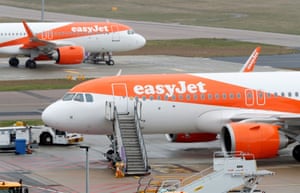
Newsflash: Budget airline easyJet has suffered a cyber attack affecting nine million of its customers.
In a statement to the City, easyJet says that a “highly sophisticated source” accessed its systems, exposing the email addresses and travel details of approximately 9 million people.
They are now being contacted by the airline over the next week.
In addition, the credit card details of 2,208 customers were also accessed. EasyJet has already contacted these customers to alert them, and offer support.
The airline says:
There is no evidence that any personal information of any nature has been misused, however, on the recommendation of the ICO [Information Commissioner’s Office], we are communicating with the approximately 9 million customers whose travel details were accessed to advise them of protective steps to minimise any risk of potential phishing. We are advising customers to continue to be alert as they would normally be, especially should they receive any unsolicited communications. We also advise customers to be cautious of any communications purporting to come from easyJet or easyJet Holidays.
We’re sorry that this has happened, and we would like to reassure customers that we take the safety and security of their information very seriously.
NIESR, the think tank, has predicted that UK pay packets will fall in the months ahead as the Covid-19 pandemic continues, particularly in the private sector.
They’ve analysed this morning’s unemployment data, and found signs that the government’s furlough scheme is limiting job losses, but leading to pay cuts:
In the final week of March, the total number of hours worked was around 25% smaller than in other weeks within the quarter. This reflects the large number of people being furloughed. Furloughing has helped to limit the rise in unemployment. The unemployment claimant count rose by 850,000 to 2.10 million in April. The number of vacancies fell to 351,000 in April, from 750,000 in March.
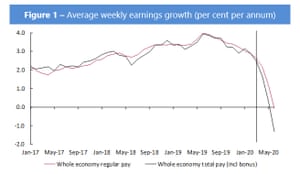
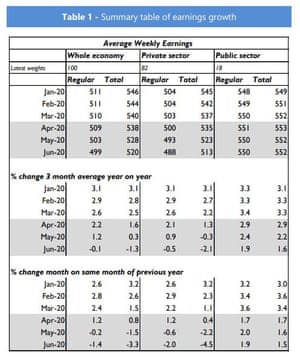
By early May a quarter of paid employees had been furloughed, with 80 per cent of their pay (up to £2,500 per month) being met by the government. This will mean that measured average earnings will fall in the short term, reflecting the lower pay of those who have been furloughed. An early sign of this was that median monthly pay fell by £55 in April to £1789 per month.
Pay growth had been running at over 3% per annum, but the 2.5% month-on-month drop in April shows that earnings are now falling (although not yet on an annual basis)
Garry Young, Deputy Director of NISER, explains:
“The extent of the economic fallout from Covid-19 is becoming clearer. Many businesses are under severe financial pressure and are only able to retain staff because of the government’s furlough scheme which is currently supporting 7½ million jobs.
Despite this, claimant unemployment rose above two million in April, the highest level since 1996, and it is very likely that we will see falls in pay in the months ahead.”
NIESR also predict that private sector employees will be hit harder than the public sector, where many essential workers are employed.
By June, total private sector pay (including bonuses) could be falling by 4.5% per year, it estimates, while public sector pay will be broadly flat.
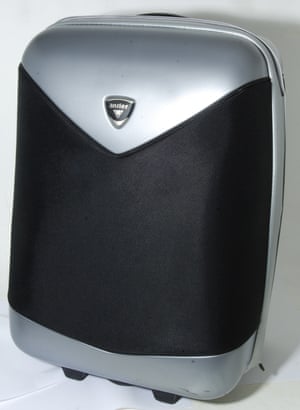
UK luggage brand Antler has fallen into administration, making it the latest corporate victim of the Covid-19 crisis.
Antler, which was founded in 1914, has suffered a slump in demand for its suitcases, carry-on bags and travel sets since travel restrictions were imposed.
Antler employed nearly 200 people, but 164 have been made redundant by restructuring firm KPMG which took control of the firm.
Will Wright, partner at KPMG and joint administrator, says the shutdown on the high street and the cancellation of most flights triggered Antler’s collapse.
“Although the business was trading well prior to the virus outbreak, restrictions imposed at the start of the lockdown period prompted the closure of Antler’s retail and wholesale outlets, while the impact on international travel has also significantly affected sales,” said
“With uncertainty over the lifting of travel restrictions placing further financial strain on the business, the directors concluded that they had no option but to appoint administrators.”
Douglas Fraser✒️🎥🎙
(@BBCDouglasF)Antler luggage, founded 106 years ago, based Bury and London, put in administration: 199 staff furloughed, of whom 164 made redundant. Holiday and international travel market has been hard hit, obvs.

The UK’s unemployment problems have deepened this morning with Ovo Energy, Britain’s second biggest energy supplier, announcing 2,600 job cuts and several office closures around the UK.
The move is at least partly driven by the pandemic, which has forced Ovo to stop checking customers’ energy meters, for example.
But it also follows Ovo’s recent acquisition of SSE’s household supply division in a £500m deal.
My colleague Julia Kollewe explains:
The decision comes just four months after Ovo bought SSE’s retail division for £500m, instantly increasing its customer base from 1.5m to 5m homes.
Announcing the cuts on Tuesday, Ovo said the Covid-19 pandemic had accelerated a shift in customer behaviour, with more people going online, which had permanently reduced the need for some functions and roles.
The job losses will affect gas engineers, electricians, meter readers, and call centre staff and the company will close its offices in Glasgow’s Waterloo Street, Selkirk and Reading. Jobs are also expected to go at offices in Perth, Cumbernauld and Cardiff.
The GMB union accused Ovo of betrayal, saying it had promised that there would be no job losses after the takeover of SSE’s retail business.
Read the original article at The Guardian