Wuhan plans to test all 11 million residents for coronavirus
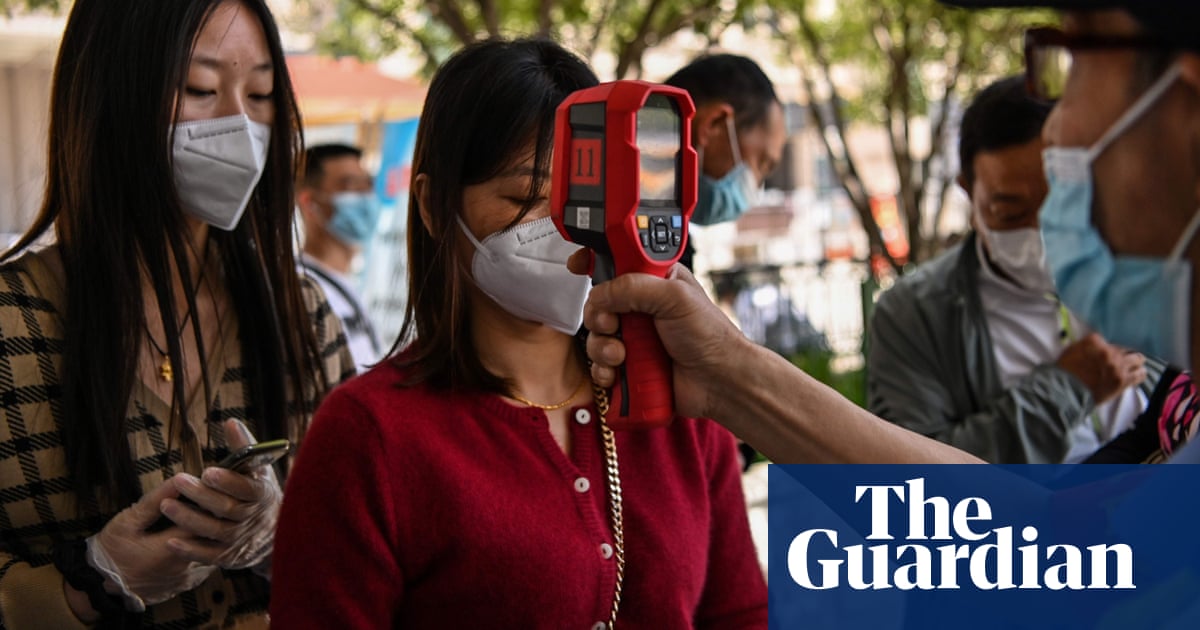
Wuhan plans to conduct coronavirus tests on the Chinese city’s entire population after new cases emerged for the first time in weeks in the cradle of the global pandemic, state media has reported.
Officials had been ordered to submit by noon on Tuesday plans to administer tests on all residents in the city of 11 million people, according to an official notice carried by news outlets.
Quick guide
Will there be a second wave of coronavirus?
Epidemics of infectious diseases behave in different ways but the 1918 influenza pandemic that killed more than 50 million people is regarded as a key example of a pandemic that occurred in multiple waves, with the latter more severe than the first. It has been replicated – albeit more mildly – in subsequent flu pandemics.
How and why multiple-wave outbreaks occur, and how subsequent waves of infection can be prevented, has become a staple of epidemiological modelling studies and pandemic preparation, which have looked at everything from social behaviour and health policy to vaccination and the buildup of community immunity, also known as herd immunity.
This is being watched very carefully. Without a vaccine, and with no widespread immunity to the new disease, one alarm is being sounded by the experience of Singapore, which has seen a sudden resurgence in infections despite being lauded for its early handling of the outbreak.
Although Singapore instituted a strong contact tracing system for its general population, the disease re-emerged in cramped dormitory accommodation used by thousands of foreign workers with inadequate hygiene facilities and shared canteens.
Singapore’s experience, although very specific, has demonstrated the ability of the disease to come back strongly in places where people are in close proximity and its ability to exploit any weakness in public health regimes set up to counter it.
Conventional wisdom among scientists suggests second waves of resistant infections occur after the capacity for treatment and isolation becomes exhausted. In this case the concern is that the social and political consensus supporting lockdowns is being overtaken by public frustration and the urgent need to reopen economies.
The threat declines when susceptibility of the population to the disease falls below a certain threshold or when widespread vaccination becomes available.
In general terms the ratio of susceptible and immune individuals in a population at the end of one wave determines the potential magnitude of a subsequent wave. The worry right now is that with a vaccine still months away, and the real rate of infection only being guessed at, populations worldwide remain highly vulnerable to both resurgence and subsequent waves.
“Each district should make plans and arrangements to conduct nucleic acid tests on the entire population in its jurisdiction within a 10-day time limit,” the notice said, although it was unclear when testing would begin.
The planned checks come after Wuhan reported the first cluster of new Covid-19 infections since the city reopened after a 76-day lockdown on 8 April.
Six cases were reported on Sunday and Monday from a residential compound in Dongxihu district. But an official from the district epidemic prevention and control commanding office said they had “not yet received news about this notice”.
China has largely brought the virus under control, but it has been cautious about being hit by a second wave of infections as it lifted lockdown restrictions across the country.
Virus clusters have appeared in recent weeks in the north-eastern provinces of Jilin and Heilongjiang, on the Russian border.
With the virus taking hold in other countries, China has barred most foreigners from entry.
Q&A
What is a wet market?
At the crack of dawn every day, “wet markets” in China and across Asia come to life, with stall owners touting their wares, such as fresh meat, fish, fruit and vegetables, herbs and spices in an open-air setting. The sights and sounds of the wet market form part of the rich tapestry of community life, where local people buy affordable food, or just go for a stroll and meet their neighbours for a chat.
While supermarkets selling chilled or frozen meats are increasingly popular in Asia, older shoppers generally prefer buying freshly slaughtered meat for daily consumption, believing it produces flavour in dishes and soup that is superior to frozen meat.
“Wet markets”, where water is sloshed on produce to keep it cool and fresh, may be considered unsanitary by western standards. But most do not trade in exotic or wild animals and should not be confused with “wildlife markets” – now the focus of vociferous calls for global bans.
The Wuhan South China seafood market, suspected to be a primary source for spreading Covid-19 in late 2019, had a wild animal section where live and slaughtered species were for sale, including snakes, beavers, badgers, civet cats, foxes, peacocks and porcupines among other animals.
Wuhan has reported 3,869 coronavirus deaths since it emerged there in December, accounting for most fatalities in China. Scientists believe the virus jumped from animals to humans at a “wet” market that sold wildlife in the city.
Read the original article at The Guardian