World Chagas Disease Day: bringing a forgotten disease to the fore of global attention
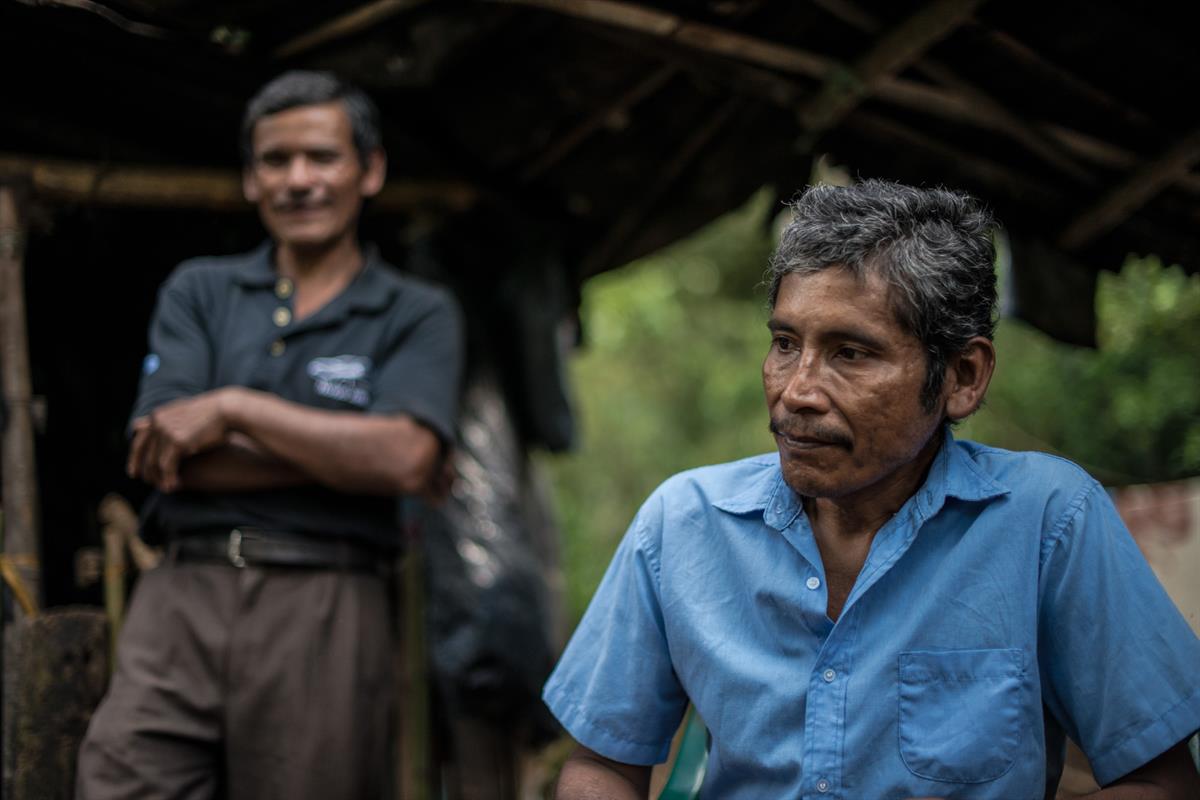
The\n social consequences of stigma associated with Chagas disease lead to \nsocial rejection. People who suffer from the disease can face work \nrestrictions because it is often associated with poor health and \npotential difficulties in performing work, and even sudden death, \ncreating a fear of financial losses by employers. Among others, it is \nfor these reasons that people are reluctant to seek medical help – \nleading to more serious clinical manifestations and final complications \nand further spread of the disease.
In\n Latin America, Chagas disease has been mostly transmitted to humans by \ncontact with the faeces or urine of particular species of triatomine \nbugs infected with the parasite Trypansosoma cruzi.\n
These\n bugs typically live in the wall or roof cracks of homes in rural or \nsuburban areas. Normally they hide during the day and are active at \nnight when they feed on human blood by biting an exposed area of skin, \nsuch as the face (hence its local name ‘kissing bug’, among many \nothers). Soon after its blood meal, the bug defecates or urinates close \nto the bite. The parasites enter the body when the person instinctively \nreacts to the bite while smearing the bug faeces or urine into the bite \nor any other skin break, the eyes and the mouth or by contamination of \nfood during its preparation, storage and consumption, frequently causing\n outbreaks of oral transmission with higher morbidity and mortality \nrates.
Urbanization and spread
But\n with rapid urbanization and movement of populations between Latin \nAmerica and other countries outside the region, the disease spread to \nurban areas and to other countries and continents, including Europe and \nsome African, Eastern Mediterranean and Western Pacific countries.
“In\n these countries, Chagas disease is not transmitted by triatomine bugs \nas it does in Latin America – but rather through other (non-vectorial) \nways” said Dr Pedro Albajar Viñas, Medical Officer, WHO Department of Control of Neglected Tropical Diseases. “These\n include blood or blood products transfusion, mother-to-child \n(congenital) and organ transplantation and even laboratory accidents.”
In\n recognition of this growing public health problem and the need to \ncreate awareness on ways to increase detection and prevent its spread, \nthe Seventy-second World Health Assembly – WHO’s decision-making body – \nagreed to designate 14 April as World Chagas Day.
Chagas\n disease is named after Carlos Ribeiro Justiniano Chagas, a Brazilian \nphysician and researcher who discovered the disease in 1909.\n\n
Improving awareness and promoting health-seeking behaviour
The\n disease is poorly understood by health professionals in non-endemic \nareas, with many who consider it to be a tropical disease restricted to \nsome territories of Latin America. Similarly, patients infected with T.cruzi\n in non-endemic areas may not be aware of their condition which can lead\n to further transmission through non-vectorial routes of transmission.
“Training\n health personnel to facilitate diagnosis, using all possible \nopportunities of systematic integration with other neglected tropical \ndiseases and other chronic communicable and non-communicable diseases, \ntogether with the provision of adequate medical care can greatly help to\n mitigate transmission and improve prognosis” said Dr Albajar Viñas. “Lack\n of awareness and knowledge about the disease, along with incorrect \noutdated beliefs, are clear obstacles to promoting health-seeking \nbehaviour.”
This\n year is the first opportunity for the global community to better \nunderstand and make visible the health, psycho-social and economic \ndimensions of this long-forgotten and ignored disease.


