CDC Newsroom
Native Americans with Diabetes
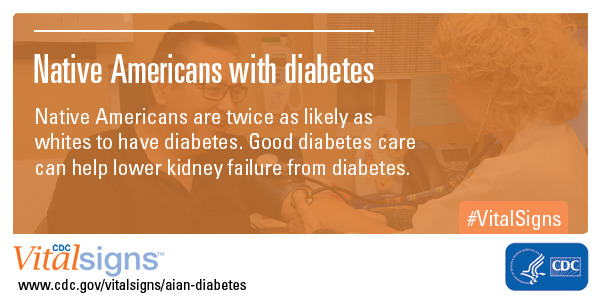
Remarkable progress made reducing kidney failure from diabetes in Native American populations
Federal data show diabetes-related kidney failure among Native American adults (American Indians/Alaskan Natives) decreased 54 percent between 1996 and 2013. This remarkable decrease follows population-based approaches to diabetes management and improvements in clinical care begun by the Indian Health Service (IHS) in the mid-1980s.
- Native Americans have a greater chance of having diabetes than any other U.S. racial/ethnic group.
- Diabetes is the leading cause of kidney failure in the U.S. Two out of three Native Americans with kidney failure have diabetes. But the rate of diabetes-related kidney failure in Native Americans has declined the fastest of any racial/ethnic group in the U.S.
- Kidney failure is a devastating and costly condition that requires regular dialysis or a kidney transplant for survival. Diabetes-related kidney failure is delayed or prevented by controlling blood pressure and blood sugar, using kidney-protective medicines, and regular kidney testing.
Key Findings from the report include:
- Despite well-documented health and socioeconomic disparities in the Native American population, kidney failure from diabetes has decreased substantially since 1996.
- IHS-supported care for Native Americans with diabetes has improved:
- Use of medicine to protect kidneys increased greatly, from 42% to 74% in 5 years.
- Average blood pressure in those with hypertension is well-controlled (133/76 in 2015).
- Blood sugar control improved by 10% between 1996 and 2014.
- More than 60% of Native Americans 65 years and older had a urine test for kidney damage (2015) compared to 40% of the Medicare diabetes population (2013).
- The Indian Health Service applied strong coordinated clinical care and education, community outreach and environmental changes. These measure can make a dramatic difference in reducing complications from diabetes for all Americans.
Read the original news at Centers for Disease Control and Prevention (CDC)