CDC Newsroom
New CDC Vital Signs: E-cigarette Ads and Youth – Digital Press Kit
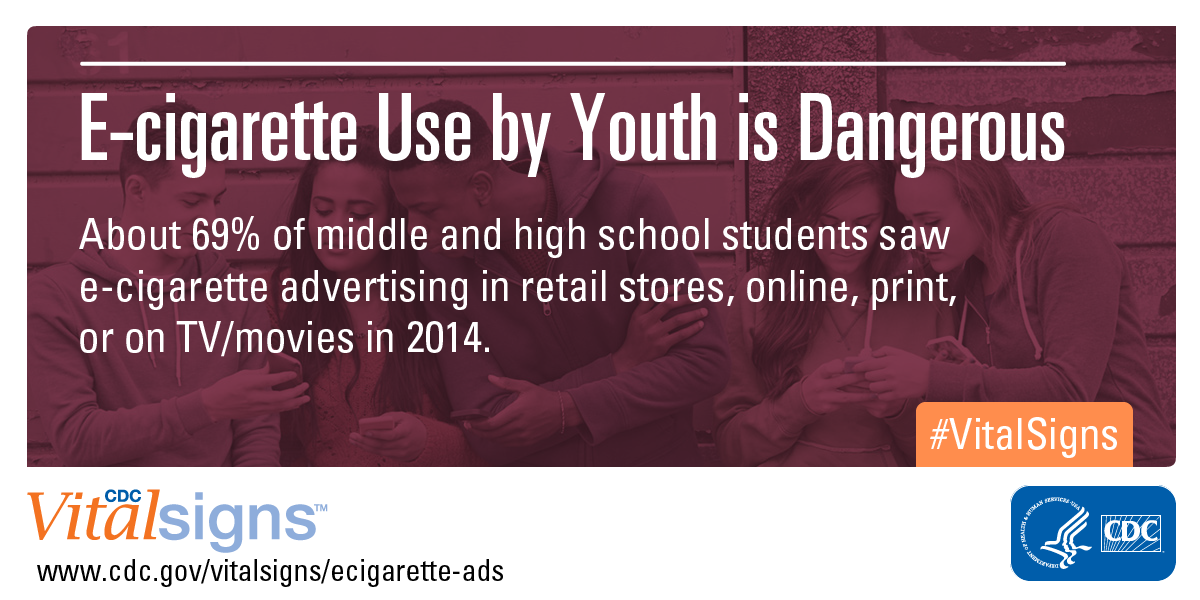
About 7 in 10 middle and high school students – more than 18 million young people – see e-cigarette advertising in stores, online, in newspapers and magazines, or on television and in movies, according to a new CDC Vital Signs report.
Data from the 2014 National Youth Tobacco Survey (NYTS) show 68.9 percent of middle and high school students see e-cigarettes ads from one or more media sources. Youth see e-cigarette ads in retail stores (54.8 percent), online (39.8 percent), in TV/movies (36.5 percent),and in newspapers and magazines (30.4 percent).
- Advertising of tobacco products has been shown to cause youth to start using those products. E-cigarette ads use many of the same themes – independence, rebellion, and sex – used to sell cigarettes and other conventional tobacco products.
- The unrestricted marketing of e-cigarettes and dramatic increases in their use by youth could reverse decades of progress in preventing tobacco use among youth. Spending on e-cigarette advertising rose from $6.4 million in 2011 to an estimated $115 million in 2014. In 2014, e-cigarettes became the most commonly used tobacco product among youth, surpassing conventional cigarettes. During 2011 to 2014, current e-cigarette use among high school students soared from 1.5 percent to 13.4 percent, and among middle school students from 0.6 percent to 3.9 percent.
Other key findings in the Vital Signs report show that:
- More than half of high school students (8.3 million) saw e-cigarette ads in retail stores, and more than 6 million saw them on the Internet.
- More than half of middle school students (6 million) saw e-cigarettes ads in retail stores, and more than 4 million saw them on the Internet.
- About 15 percent of all students (4.1 million) saw e-cigarette ads from all four sources: retail stores, the Internet, TV/movies, and magazines/newspapers.
Strategies to reduce youth access to e-cigarettes could include:
- Limiting tobacco product sales to facilities that never admit youth,
- Restricting the number of stores that sell tobacco and how close they can be to schools,
- Requiring that e-cigarettes be sold only through face-to-face transactions, not on the Internet, and
- Requiring age verification to enter e-cigarette vendor’s websites, make purchases, and accept deliveries of e-cigarettes
Read the original news at Centers for Disease Control and Prevention (CDC)