Allowing workers to remain in abattoirs while awaiting Covid test results ‘encourages screening’
Epidemiologists say allowing non-symptomatic abattoir staff to work while awaiting Covid-19 test results is a “necessary risk” during the pandemic.
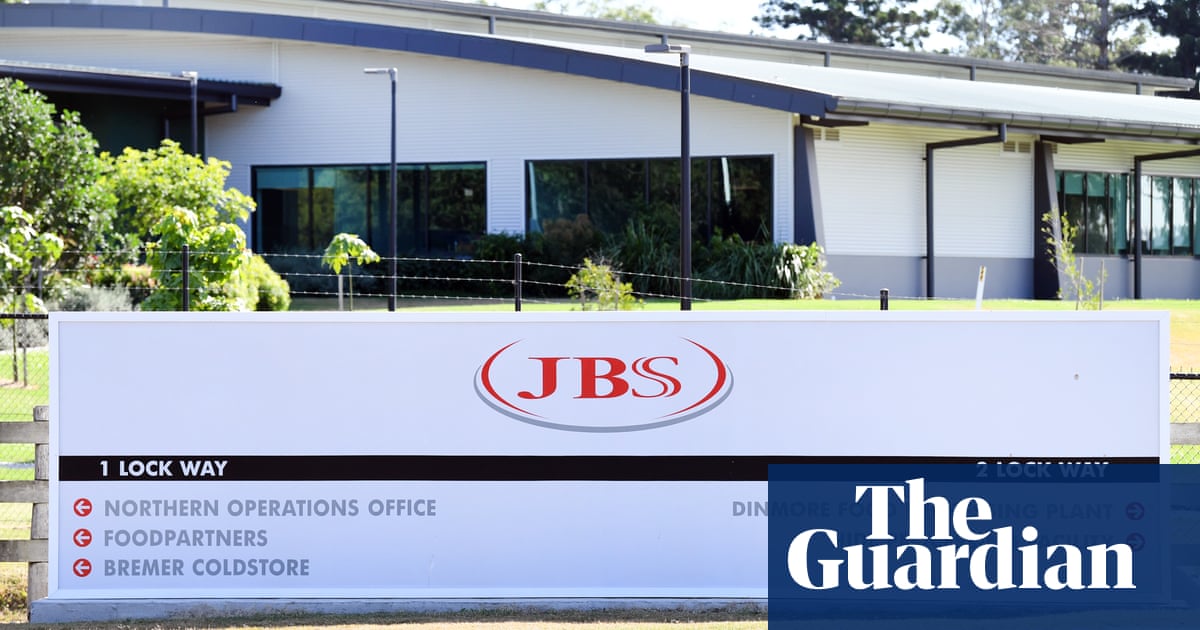
A worker at the JBS Australia meatworks plant in Melbourne, which has been partially closed told ABC radio he was asked to return to work while awaiting test results. He worked in the cold storage area of the plant, which was not impacted by the recent outbreak, and workers in that area were not considered to be close contacts.
“I was repeatedly told that I’m required to work. There’s a chance it’s still in the facility. But unfortunately, money is needed, and I’m getting to the point where I have no choice but to risk it,” he said.
Allowing people who are not close contacts or showing symptoms to work is in line with changes to the public health guidelines published by the Communicable Disease Network Australia on 12 August.
Meatworks have repeatedly proven to be rapid incubators for the coronavirus. The cold temperatures and close working conditions allow the virus to spread rapidly throughout the plants.
While the JBS cold storage worker and some in the medical field expressed concern over the changes to the guidelines, Prof Catherine Bennett, the chair of epidemiology at Deakin University, said allowing non-symptomatic staff to continue to work is necessary in order to allow frequent testing of workers in high-risk environments.
“It sounds worrying but it’s not like anyone has been exposed. This is screening, so it’s actually a different process,” she said.
“It’s not the same as saying someone’s had a very specific exposure, or are a close contact, and that they need testing because there’s a reasonable probability they will be a case.”
There have been several other examples of non-symptomatic people not being required to isolate after testing for Covid-19 in Victoria. During Melbourne’s testing blitz in June, the health department aimed to test 50% of residents of particular suburbs, including those without symptoms, who were not required to quarantine while awaiting results.
Across Australia some healthcare and aged care workers have also received routine testing to try to catch pre-symptomatic cases of Covid-19, continuing to work while tests are processed.
Prof Peter Collignon, an infectious diseases expert at the Australian National University, says the new public health guidelines encourage high-risk workplaces to test their employees more regularly.
“This is a balancing act actually, because if everybody in the whole industry is going to be tested, even when they’re asymptomatic, then you basically are closing those industries all the time,” he said.
“Otherwise the only alternative is to shut down every meatworks because every meatworks is a high-risk area.
“Everybody can say ‘well, somebody might bring it in and it might spread like wildfire’, and the answer is yes, it could. But the reality is unless we are going to all become vegetarians, we need meatworks to stay open.”
Susie Allison, the director for food and beverage industries at the United Workers Union, which represents many of the cold-storage workers at the JBS abattoir, said she was happy with the expansion of testing.
“United Workers Union strongly supports public health guidelines being followed to the letter when it comes to JBS meats and any other worksite where there are fears of coronavirus outbreaks. We welcome the broadest possible testing that has occurred at JBS Meats to assure as many workers as possible of their safety,” she said.
Although the union does not oppose the changes to the public health guidelines, Allison said she sympathised with the worker’s fear.
“We understand why workers have concerns about the advice they are receiving from the company in relation to testing and isolation,” she said.
Guardian Australia contacted the Victorian health department and JBS Australia for comment but did not receive a response.
Read the original article at The Guardian